Introduction
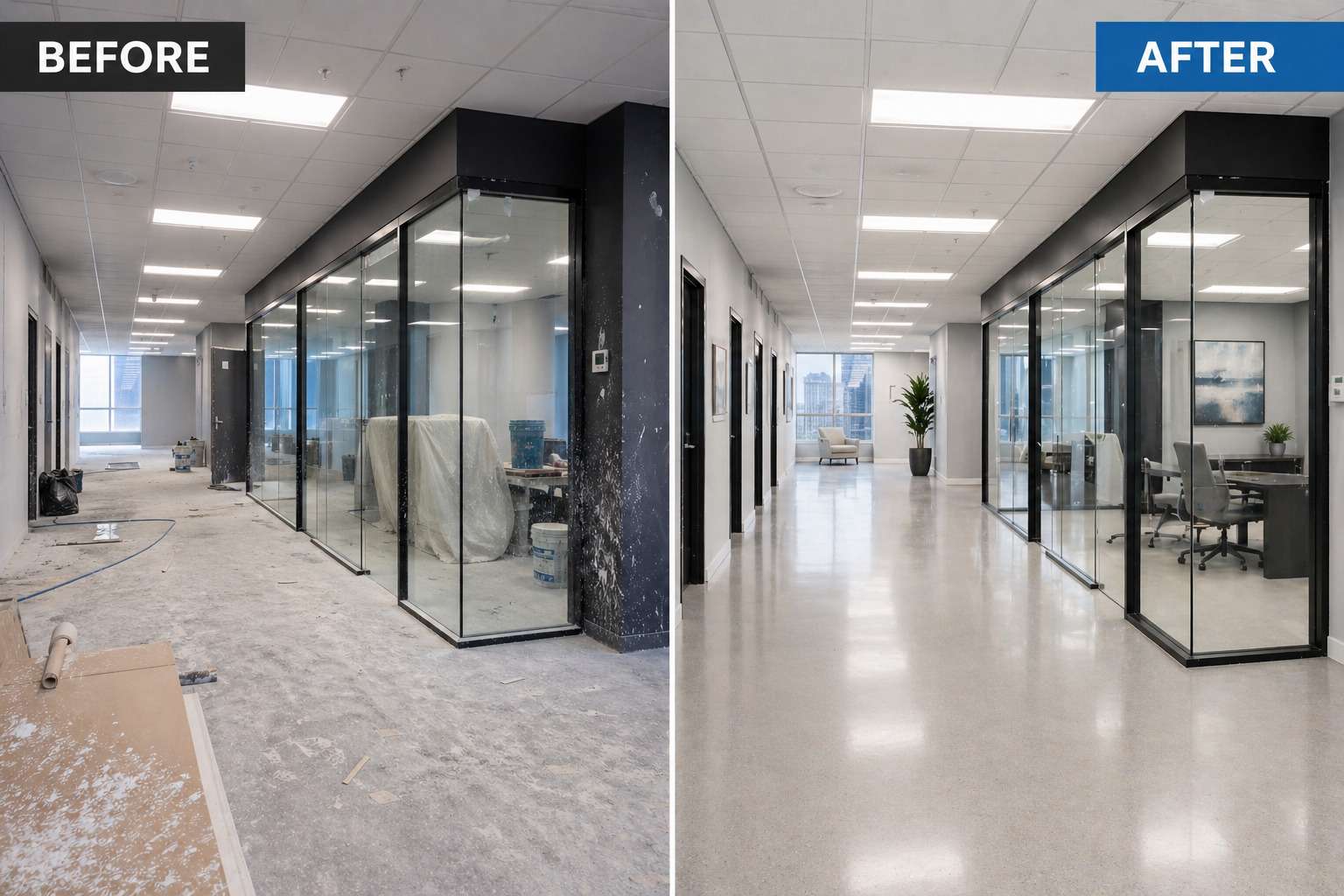
When construction crews finish a new commercial building project, the space isn’t quite ready for occupants—yet. Construction leaves behind dust, debris, paint splatters, concrete residue, and countless particles that settle into every corner. This is where post-construction cleaning becomes critical.
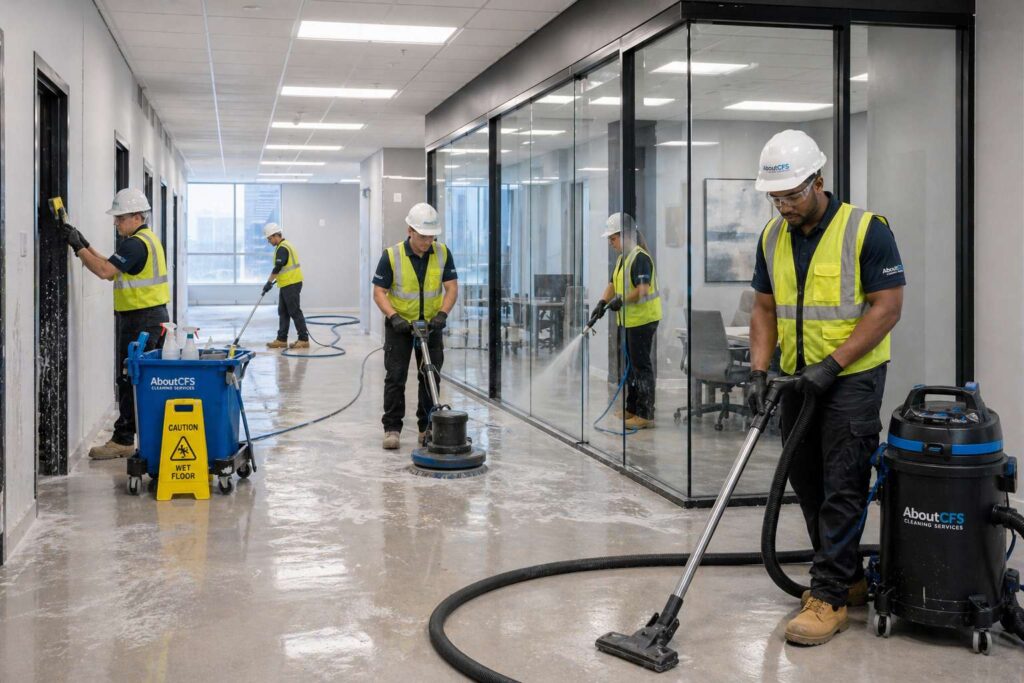
Many property managers and business owners underestimate the complexity of post-construction cleanup. It’s not like regular janitorial cleaning. Post-construction cleaning requires specialized equipment, trained professionals, and a systematic approach to ensure the building meets safety standards and is truly move-in ready.
According to the International Sanitary Supply Association (ISSA), improper post-construction cleanup can lead to indoor air quality issues, equipment damage, and delayed occupancy. The cost of inadequate cleanup often exceeds the savings of skipping professional services.
This comprehensive guide walks you through everything you need to know about post-construction cleaning for commercial buildings—what needs to happen, in what order, and how to ensure nothing gets missed. Whether you’re managing a new office, retail space, or industrial facility, this checklist will help you transition from construction site to professional workspace.
Safety and Health Compliance
Construction dust contains silica, drywall particles, paint fumes, and other hazardous materials. When workers and employees enter without proper cleanup, respiratory problems can develop. OSHA standards require buildings to be free of construction debris and hazardous dust before occupancy. Professional post-construction cleaning ensures compliance with:
- OSHA regulations for dust exposure limits
- EPA air quality standards for indoor environments
- Local building codes requiring final inspections
- Insurance requirements for occupancy approval
Neglecting proper cleanup can result in fines, delayed occupancy, employee health complaints, and liability issues.
Equipment and System Protection
Construction dust damages expensive equipment. HVAC systems clogged with construction dust work inefficiently and fail prematurely. Elevators, security systems, and computer networks can malfunction when exposed to dust and debris. Professional cleaning protects:
- HVAC systems – Prevents dust buildup reducing efficiency by up to 40%
- Elevators – Protects mechanical components from debris damage
- Electrical systems – Reduces fire risk from dust accumulation
- Network infrastructure – Prevents equipment failures from particle infiltration
One HVAC system failure can cost $5,000-$15,000 to repair. Professional post-construction cleaning costs far less.
Professional First Impressions
When clients, customers, or employees enter a newly completed commercial space for the first time, cleanliness directly impacts their perception. A spotless building signals quality, attention to detail, and professionalism. Construction dust, debris, and residue create the opposite impression—suggesting carelessness and unpreparedness.
Studies show that 89% of customers form opinions about businesses within the first 10 seconds of entering the space. A clean, professional environment sets a positive tone for the relationship.
Regulatory Approval and Occupancy
Most jurisdictions require final inspections before occupancy permits are issued. Inspectors specifically check for:
- Removal of hazardous construction materials
- Dust and debris elimination
- Safe indoor air quality
- Working utilities and systems
- Compliance with building codes
Professional post-construction cleaning ensures you pass inspections on the first attempt, avoiding delays that cost thousands in lost productivity.
Complete Post-Construction Cleaning Checklist
PHASE 1: ROUGH CLEANUP (Day 1-2)
This initial phase removes large debris and construction waste.
Debris Removal
- Remove all construction materials (drywall scraps, lumber, packaging)
- Sweep all large debris from floors
- Empty all trash containers and remove from building
- Remove plastic coverings, tarps, and protective materials
- Collect all nails, screws, and sharp objects
- Dispose of hazardous materials properly (paint, solvents, adhesives)
- Clear all storage areas and closets of construction items
- Remove protective coverings from fixtures and finishes
Window and Glass Cleaning (Exterior)
- Clean exterior windows of paint, tape residue, and grime
- Remove construction adhesive and protective film
- Clean glass entryways thoroughly
- Inspect for damage or residue
- Ensure all glass is clear and transparent
Floor Protection Removal
- Remove floor protective coverings
- Remove tape and adhesive residue from floors
- Inspect floors for damage or staining
- Note any areas requiring specialized treatment
Initial Dust Control
- Perform first pass with industrial-grade vacuum
- Target main dust sources (walls, ceilings, surfaces)
- Use HEPA-filter vacuums to capture fine particles
- Open windows for dust ventilation (if weather permits)
- Run HVAC system continuously to circulate air
PHASE 2: DETAILED SURFACE CLEANING (Day 2-3)
This phase focuses on systematic surface cleaning throughout the building.
Wall and Ceiling Cleaning
- Wipe down all walls with damp microfiber cloths
- Remove paint splatters and adhesive residue
- Clean ceiling surfaces and light fixtures
- Remove cobwebs and dust from upper surfaces
- Clean air vents and return air grilles
- Wipe baseboards throughout all areas
- Remove sticky residue from protective tape
- Clean all door frames and trim
Door and Hardware Cleaning
- Clean all interior and exterior doors
- Wipe door handles, locks, and hardware
- Remove paint drips and construction residue
- Clean around door frames and thresholds
- Wipe all hinges and closing mechanisms
- Clean door glass (if applicable) thoroughly
- Ensure all doors open and close smoothly
Window Cleaning (Interior)
- Clean interior window panes thoroughly
- Wipe all window frames and sills
- Remove protective film and residue
- Clean window hardware and locks
- Ensure all windows open and close properly
- Remove caulk drips or excess sealant
- Inspect for damage or defects
Fixture and Equipment Cleaning
- Wipe all light fixtures and covers
- Clean ceiling fixtures and trim
- Wipe electrical outlets and switches
- Clean thermostats and control panels
- Wipe all mounted equipment
- Remove protective coverings from new fixtures
- Clean any construction-related staining
Floor Cleaning (Detailed)
- Vacuum all floor areas thoroughly (2-3 passes minimum)
- Damp mop hard floors with appropriate cleaners
- Address paint splatters or stains
- Clean baseboards and floor edges
- Use floor strippers for stubborn adhesive residue
- Polish hard floors for shine
- Professional carpet shampooing for carpeted areas
- Address any staining or discoloration
PHASE 3: SPECIALIZED CLEANING (Day 3-4)
This phase addresses specific areas and specialized requirements.
HVAC System Cleaning
- Change or clean all HVAC filters
- Inspect ductwork for construction debris
- Clean return air vents thoroughly
- Remove any dust accumulation in ducts
- Test HVAC system operation
- Verify proper airflow throughout building
- Clean around all vent openings
- Professional duct cleaning (if necessary)
Restroom Cleaning
- Thoroughly clean all toilets, sinks, and urinals
- Scrub and disinfect all surfaces
- Clean mirrors and fixtures
- Wipe all hardware and grab bars
- Remove any construction debris or residue
- Ensure all plumbing works properly
- Stock paper products and soap dispensers
- Check that ventilation systems work
Kitchen and Break Area Cleaning
- Clean all cabinets inside and out
- Wipe appliance exteriors and interiors
- Clean sink and faucet thoroughly
- Wipe countertops and backsplash
- Clean any construction dust from electrical outlets
- Remove protective coverings from appliances
- Ensure all appliances function properly
- Disinfect all food preparation surfaces
Conference Rooms and Office Spaces
- Dust all surfaces thoroughly
- Wipe down glass conference tables
- Clean white boards and marker boards
- Dust all shelving and storage units
- Vacuum or mop all floor areas
- Clean windows thoroughly
- Remove any construction materials or debris
- Ensure climate control works properly
Stairwells and Common Areas
- Thoroughly vacuum or mop all stairs
- Wipe railings and handrails
- Clean wall surfaces along stairwells
- Remove adhesive residue from steps
- Ensure emergency lighting works
- Clean corridor walls thoroughly
- Address any scuff marks or stains
- Verify proper ventilation
PHASE 4: FINAL INSPECTION AND TOUCH-UP (Day 4-5)
This final phase ensures every detail meets professional standards.
Final Walk-Through Inspection
- Inspect every room and area systematically
- Check for any missed debris or dust
- Verify all surfaces are clean and professional
- Test all utilities and systems
- Check lighting throughout building
- Verify climate control functioning
- Test plumbing in all locations
- Confirm all doors and windows operate smoothly
Touch-Up Cleaning
- Address any remaining dust or debris
- Re-clean any areas that need attention
- Polish any streaked surfaces
- Remove any final residue or marks
- Final vacuum of all carpeted areas
- Final mop of all hard floors
- Wipe any final smudges on glass or fixtures
- Final inspection of high-traffic areas
Air Quality Testing
- Monitor for remaining construction dust
- Test HVAC system operation
- Verify proper air circulation
- Ensure no odors remain
- Check for proper ventilation throughout
- Document air quality compliance
- Run HVAC system for final clearing
- Verify building air quality meets standards
Final Documentation
- Complete final inspection checklist
- Photograph cleaned areas for records
- Document all areas addressed
- Note any areas requiring special attention
- Prepare final report for property manager
- Verify all work completed to specifications
- Obtain sign-off from client
- Schedule follow-up if needed
Professional Equipment and Materials Needed
Post-construction cleaning requires specialized tools and equipment that most regular janitorial services don’t have:
Industrial Vacuums
- HEPA-filter vacuums capture fine construction dust
- Wet/dry vacuums handle debris and liquid spills
- Industrial-grade filtration prevents dust escape
- Cost: $2,000-$5,000+ per unit
Pressure Washing Equipment
- Removes stubborn construction residue
- Cleans exterior surfaces effectively
- Operates at 3,000+ PSI for maximum cleaning power
- Cost: $3,000-$8,000+
Dust Control Systems
- Industrial-grade air filtration
- Negative air machines contain dust
- HEPA filtration prevents air contamination
- Cost: $4,000-$10,000+
Specialized Cleaning Tools
- Microfiber cloths capture fine dust
- Soft-bristle brushes prevent surface damage
- Floor strippers remove adhesive residue
- Extension poles reach high surfaces safely
- Glass scrapers remove protective film
Chemical Cleaners
- Construction-grade degreasers
- Dust suppressant products
- Specialized stain removers
- Disinfectants meeting health standards
- Paint and adhesive removers
Most commercial buildings require $5,000-$15,000 in equipment investment for proper post-construction cleaning. Professional contractors spread these costs across multiple projects, making outsourcing more cost-effective than in-house attempts.
Common Post-Construction Cleaning Mistakes to Avoid
Mistake 1: Starting Too Early
The Problem: Beginning cleanup while construction crews still work spreads new dust and requires re-cleaning.
The Solution: Wait until construction is 100% complete before starting. Coordinate with project managers to ensure no additional construction activity occurs during cleaning.
Mistake 2: Skipping HVAC System Cleaning
The Problem: Construction dust in HVAC ducts circulates throughout the building, causing air quality issues and reducing system efficiency.
The Solution: Hire professional HVAC contractors to clean and inspect ductwork. Change filters after construction and before occupancy.
Mistake 3: Using Inappropriate Equipment
The Problem: Regular vacuum cleaners without HEPA filters release construction dust back into the air, worsening the problem.
The Solution: Use only HEPA-filter industrial vacuums specifically designed for construction cleanup.
Mistake 4: Inadequate Surface Preparation
The Problem: Failing to remove protective coverings or adhesive residue leaves visible marks and creates poor first impressions.
The Solution: Systematically work through every surface, removing all protective materials and residue before final cleaning.
Mistake 5: Rushing the Timeline
The Problem: Attempting to complete post-construction cleaning in 1-2 days results in missed areas and incomplete work.
The Solution: Allow 3-5 days for thorough post-construction cleaning depending on building size and construction scope.
Mistake 6: Ignoring Safety Hazards
The Problem: Construction debris can include hazardous materials requiring special handling and disposal.
The Solution: Have professionals identify and properly dispose of hazardous materials according to EPA regulations.
Mistake 7: Overlooking Final Inspections
The Problem: Missing hidden dust or debris that becomes apparent after occupancy damages the professional image.
The Solution: Conduct systematic final inspections of every room, surface, and system before considering work complete.
How AboutCFS Handles Post-Construction Cleaning
AboutCFS specializes in post-construction cleaning for commercial buildings across all industries. Our systematic approach ensures your newly completed or renovated space is pristine, safe, and ready for occupancy.
Our Post-Construction Cleaning Process
Phase 1: Planning & Assessment We work with construction project managers to understand the scope of construction, identify potential challenges, and develop a customized cleaning plan. We schedule cleanup after construction is 100% complete to avoid duplication of effort.
Phase 2: Professional Debris Removal Our teams use industrial equipment to remove all construction debris, materials, and hazardous waste. We dispose of materials responsibly according to EPA regulations and local requirements.
Phase 3: Systematic Surface Cleaning We systematically clean every surface—walls, ceilings, floors, fixtures, equipment—using specialized cleaners appropriate for each material. Our HEPA-filter equipment captures fine construction dust rather than redistributing it.
Phase 4: HVAC and System Verification We coordinate with mechanical contractors to ensure HVAC systems are clean and functioning properly. We verify all building systems operate correctly before occupancy.
Phase 5: Final Inspection & Compliance Our supervisors conduct thorough final inspections, documenting completion of all cleaning tasks and verifying compliance with building codes and health standards.
Why Choose AboutCFS for Post-Construction Cleaning
Industry Experience: We’ve cleaned hundreds of commercial buildings after construction/renovation across office, retail, industrial, and healthcare sectors.
Specialized Equipment: We invest in industrial-grade equipment specifically designed for post-construction cleaning challenges.
Safety Compliance: All work complies with OSHA, EPA, and local building code requirements. We maintain proper insurance and certifications.
Cost Efficiency: Professional cleanup prevents costly equipment damage and allows faster occupancy, recovering costs within days.
Quality Guarantee: We stand behind our work with final inspections and touch-ups until you’re completely satisfied.
24/7 Coordination: We coordinate with construction teams and property managers to minimize disruption and meet tight occupancy timelines.
Our clients report that professional post-construction cleaning through AboutCFS saves them an average of $8,000-$12,000 in prevented equipment damage and cleanup costs, while ensuring compliance and professional appearance from day one.
Best Practices for Post-Construction Cleaning Success
Best Practice 1: Develop a Clear Timeline
Action: Create a detailed schedule showing when each cleaning phase occurs, coordinating with construction completion and occupancy dates.
Benefit: Prevents delays and ensures nothing is missed.
Best Practice 2: Communicate with Stakeholders
Action: Keep construction managers, property managers, and future building occupants informed about cleanup progress and expected completion.
Benefit: Sets expectations and coordinates efforts among all parties.
Best Practice 3: Conduct Pre-Cleaning Walk-Through
Action: Before starting cleanup, document the current condition with photos and notes, identifying specific problem areas.
Benefit: Creates baseline for comparison and prevents disputes about pre-existing conditions.
Best Practice 4: Use Professional Contractors
Action: Hire experienced post-construction cleaning contractors rather than attempting cleanup internally.
Benefit: Ensures compliance, prevents damage, and completes work faster with proper equipment.
Best Practice 5: Prioritize HVAC System Cleaning
Action: Include professional HVAC inspection and cleaning as part of post-construction cleanup budget.
Benefit: Protects equipment, ensures air quality, and prevents costly failures.
Best Practice 6: Implement Quality Control Inspections
Action: Conduct multiple inspections throughout the cleanup process to catch issues before final completion.
Benefit: Prevents rework and ensures high-quality final result.
Best Practice 7: Document Everything
Action: Keep detailed records of all cleanup activities, inspections, and compliance verification.
Benefit: Provides evidence of due diligence if regulatory issues arise.
Best Practice 8: Schedule for Move-In Readiness
Action: Time final cleaning phases to occur 24-48 hours before occupancy to maintain cleanliness.
Benefit: Building remains pristine when occupants arrive.
Conclusion
Post-construction cleaning transforms a construction site into a professional, safe commercial space ready for occupancy. The comprehensive checklist in this guide ensures nothing gets overlooked from large debris removal to fine dust elimination to system verification.
The stakes are high: inadequate cleanup creates health hazards, damages expensive equipment, delays occupancy, and projects an unprofessional image. Professional post-construction cleaning, though an additional investment, prevents these costly consequences while ensuring regulatory compliance from day one.
Whether you’re managing a small office renovation or a large commercial construction project, proper post-construction cleaning is non-negotiable. The choice between DIY attempts or professional contractors isn’t really a choice at all—professional cleanup saves time, prevents damage, ensures compliance, and costs far less than the problems it prevents.
AboutCFS provides comprehensive post-construction cleaning services for commercial buildings across all sectors. Our experienced teams, specialized equipment, and systematic approach ensure your newly completed or renovated space is pristine, safe, and ready for occupancy.
Ready for professional post-construction cleaning? Contact AboutCFS today for a free building assessment and customized cleaning proposal. Let our expertise handle the cleanup so you can focus on occupancy and operations.


