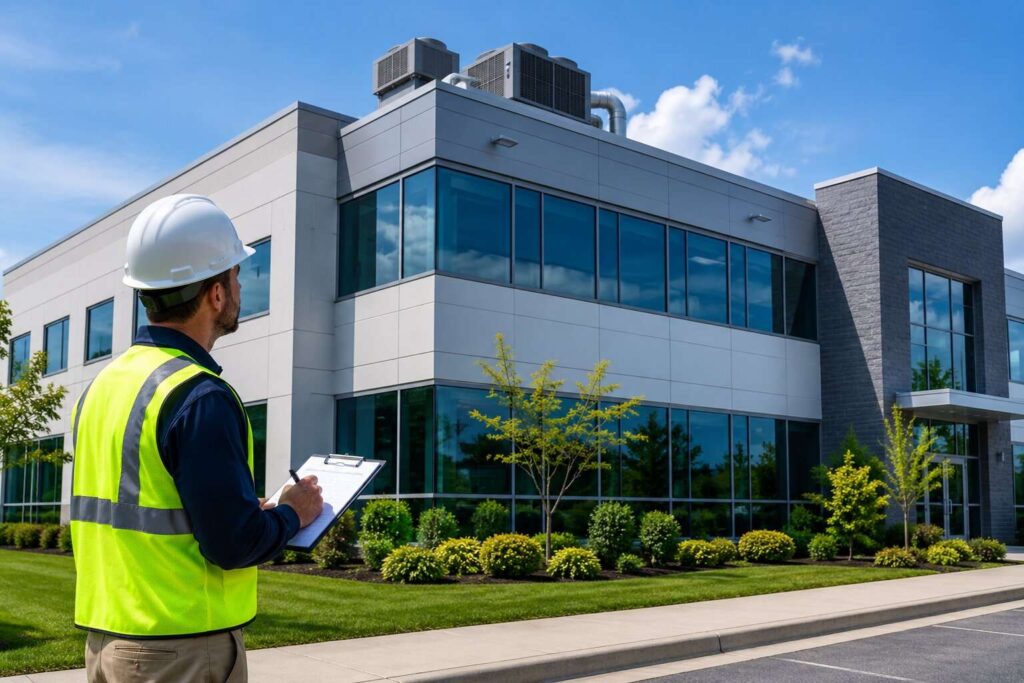
Congratulations! You own or manage a commercial building. Now comes the fun part: keeping it from falling apart. (Don’t worry it’s easier than it sounds, and dramatically cheaper than ignoring problems until your HVAC system decides to retire in the middle of summer.)
A comprehensive commercial building maintenance checklist isn’t just a bureaucratic necessity; it’s your facility’s best defense against costly emergency repairs, safety hazards, and tenant dissatisfaction. In 2026, building maintenance has evolved to combine traditional preventive practices with smart technology, data-driven scheduling, and sustainability considerations.
This guide covers everything you need to know about maintaining commercial properties efficiently, reducing downtime, and extending the lifespan of critical building systems. Whether you manage a small office building or a large commercial complex, this preventive maintenance guide will help you stay organized, compliant, and proactive.
Why Preventive Maintenance for Commercial Buildings Matters
Before diving into checklists, let’s talk about why preventive maintenance for commercial buildings is non-negotiable.
According to industry data, reactive maintenance fixing things only when they break costs approximately 25-30% more than proactive preventive maintenance. A single HVAC failure in a commercial office building can result in tenant complaints, productivity loss, and repair bills exceeding $5,000-$15,000 for emergency service calls.
Key benefits of preventive maintenance include:
- Cost savings: Extend equipment lifespan by 20-40% and reduce emergency repair expenses
- Safety compliance: Meet OSHA and building code requirements, protecting your liability
- Tenant satisfaction: Consistent maintenance ensures comfortable, functional working conditions
- Energy efficiency: Well-maintained systems operate at peak efficiency, reducing utility costs by 10-20%
- Asset value: A well-documented maintenance history increases property value for potential buyers or investors
- Reduced downtime: Planned maintenance prevents unexpected outages during critical business hours
A typical commercial building runs 250+ operating systems from electrical panels to fire suppression, plumbing, HVAC, security, and more. Without a systematic approach, these systems fail unpredictably, like dominoes. With preventive maintenance, you control the timeline and minimize disruption.
Understanding Building Maintenance Schedules and Frequency
Not all maintenance tasks happen at the same interval. A building maintenance schedule 2026 should categorize tasks by frequency: daily, weekly, monthly, quarterly, semi-annually, and annually.
Daily Maintenance Tasks
Daily tasks are routine inspections and minor upkeep that keep your building functioning smoothly:
- Check entry points and security systems (doors, locks, access cards)
- Inspect common areas for cleanliness and safety hazards (floors, stairs, parking areas)
- Monitor HVAC thermostat settings and temperature consistency
- Verify emergency lighting and signage visibility
- Perform visual checks of exterior grounds for debris or damage
- Monitor water features (fountains, retention ponds) if applicable
These tasks require minimal resources but catch small problems before they escalate. A quick daily walk-through takes 15-30 minutes and prevents 80% of major issues.
Weekly and Bi-Weekly Tasks
Weekly maintenance keeps systems running smoothly and identifies emerging problems:
- Test emergency systems (fire alarms, sprinklers, backup generators)
- Inspect restroom facilities and resupply dispensers
- Check parking lot for potholes, cracks, or debris
- Review utility readings for unusual spikes or anomalies
- Inspect roof for visible damage or debris accumulation
- Check basement and mechanical rooms for water infiltration or leaks
Essential Commercial Facility Maintenance Planning
A successful commercial facility maintenance planning strategy integrates multiple systems into one coordinated approach. Think of it as conducting an orchestra each section (HVAC, plumbing, electrical, structural) must perform independently and in harmony.
Phase 1: Asset Inventory and Documentation
Start by documenting every major system in your building:
- HVAC Systems: Make, model, installation date, service history, filter replacement schedule
- Plumbing: Main shutoff locations, pipe material, recent repairs, water pressure specifications
- Electrical: Breaker panel specifications, voltage, transformer location, emergency procedures
- Structural: Roof type and age, foundation condition, window type and seal dates
- Fire Safety: Sprinkler system type, fire extinguisher locations and inspection dates, alarm system details
- Security: Camera locations, access control systems, backup power requirements
Use a facility management software platform (Maintenance.com, Planon, or similar) to centralize this information. Digital documentation ensures nothing falls through the cracks and provides historical data for trend analysis.
Phase 2: Establishing Maintenance Intervals
Create a master schedule mapping maintenance tasks to seasons and intervals:
Monthly HVAC Maintenance:
- Replace or clean air filters
- Check refrigerant levels
- Inspect ductwork for leaks or damage
- Verify thermostat accuracy
- Clean condenser coils
Quarterly Electrical Systems:
- Test emergency lighting and backup generators
- Inspect electrical panels for corrosion or damage
- Check circuit breaker operation
- Review utility consumption patterns
- Verify grounding systems
Semi-Annual Roof and Structural:
- Professional roof inspection for leaks or deterioration
- Check flashing around penetrations (vents, skylights)
- Trim tree branches near roof
- Inspect gutters and downspouts
- Check foundation for cracks or settlement
Annual Comprehensive Reviews:
- Full HVAC system maintenance and professional servicing
- Plumbing system pressure test and drainage verification
- Electrical system load analysis
- Fire safety system inspection and certification
- ADA compliance audit
- Energy efficiency assessment
HVAC Maintenance Checklist for Commercial Buildings
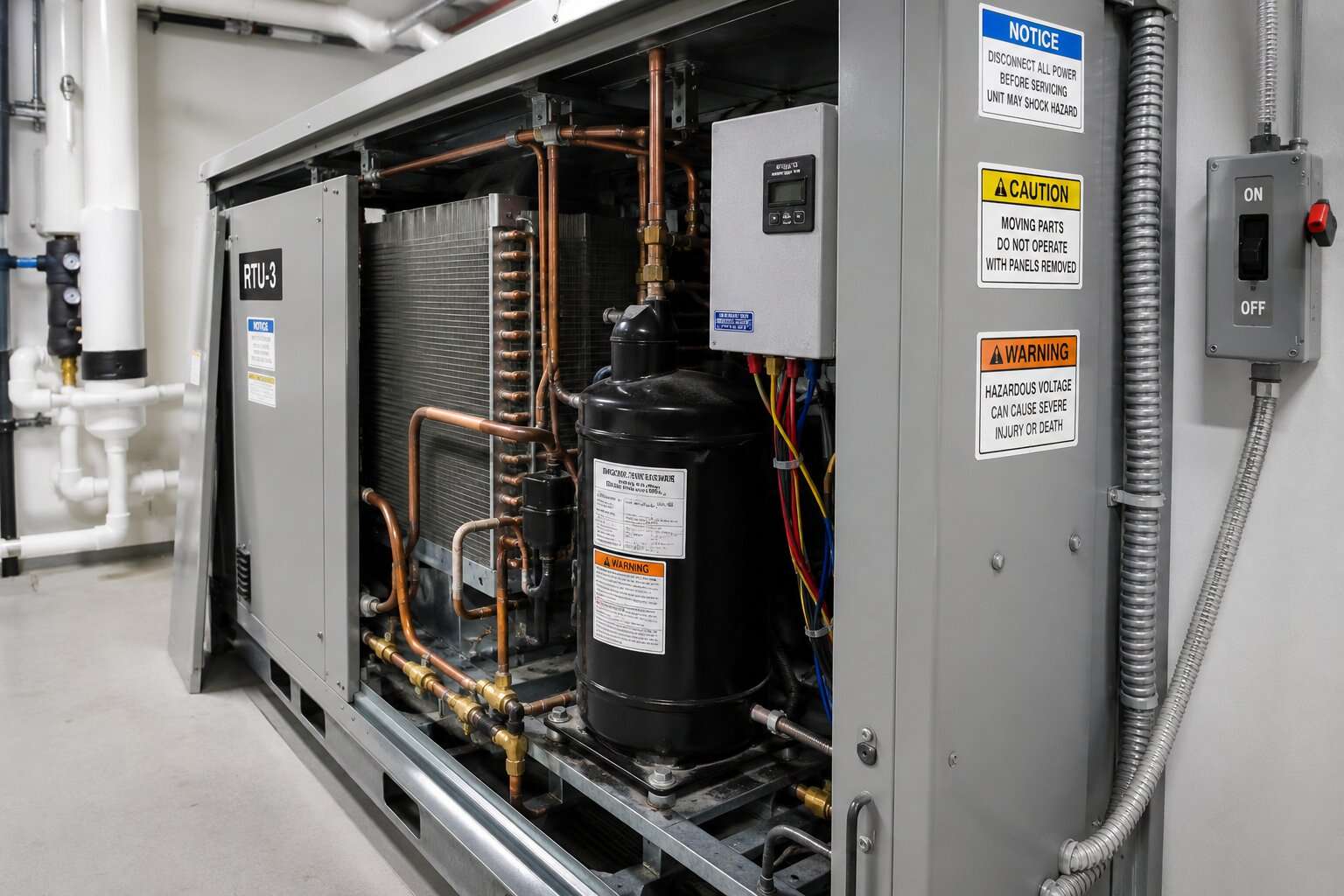
Your HVAC system is arguably the most important building system and the most expensive to replace. A detailed HVAC maintenance checklist prevents breakdowns and extends equipment life.
Monthly HVAC Tasks
Filter Management:
- Inspect air filters monthly; replace when visibly dirty
- Standard fiberglass filters: every 30 days
- HEPA filters: every 90 days in light use, 30 days in heavy use
- Keep spare filters in stock to enable immediate replacement
Refrigerant and Coolant Checks:
- Monitor refrigerant levels monthly (should remain constant)
- Check for signs of leaks (oil stains, reduced cooling performance)
- Document pressure readings; compare to manufacturer specifications
- Low refrigerant indicates a leak contact a certified technician immediately
Thermostat Verification:
- Test temperature sensors for accuracy (?2?F tolerance)
- Verify programming schedule matches occupancy patterns
- Check setpoint adjustments for energy optimization
- Update settings for seasonal changes
Quarterly and Annual HVAC Services
Quarterly Tasks:
- Clean condenser and evaporator coils
- Check blower wheel and bearings for wear
- Inspect ductwork insulation for damage
- Test duct sealing integrity with smoke tests if applicable
Annual Professional Servicing:
- Full system inspection by certified HVAC technician
- Compressor efficiency testing
- Electrical component inspection and lubrication
- Ductwork cleaning and sealing
- System performance optimization
HVAC System Efficiency Tips:
- Keep unobstructed clearance around outdoor units (3 feet minimum)
- Seal ductwork with mastic sealant to prevent air loss (can improve efficiency 20%)
- Install programmable thermostats with setback capabilities
- Schedule maintenance before peak seasons (spring/fall) to avoid emergency callouts
- Document all service calls and parts replacements for warranty purposes
Commercial Property Maintenance Guide: Beyond HVAC
While HVAC receives plenty of attention, successful commercial property maintenance addresses all building systems holistically.
Plumbing System Maintenance
Plumbing disasters burst pipes, sewer backups, water damage cost thousands and cause operational nightmares.
Monthly Plumbing Checks:
- Inspect visible pipes for corrosion, leaks, or oxidation
- Test all drains for slow flow or backups
- Check water pressure (should be 40-80 PSI; higher pressure can damage pipes)
- Inspect water heater for rust or sediment accumulation
- Check for water stains on ceilings or walls indicating hidden leaks
Annual Plumbing Services:
- Professional camera inspection of main sewer line
- Water softener regeneration and brine tank check
- Backflow prevention valve inspection
- Grease trap cleaning (restaurants and food service buildings)
- Test shutoff valves to ensure they operate smoothly
Pipe Corrosion Prevention:
- Insulate exposed pipes in unheated areas
- Use dielectric unions where dissimilar metals connect
- Monitor water quality; high mineral content requires softener maintenance
- Replace galvanized pipes (typical lifespan: 40-50 years) before catastrophic failure
Electrical System Maintenance
Electrical failures cause fires, equipment damage, and safety hazards.
Monthly Electrical Tasks:
- Visually inspect electrical panels for signs of overheating, corrosion, or pests
- Check emergency lighting battery condition
- Test ground fault circuit interrupter (GFCI) outlets
- Verify no equipment is blocking breaker panel access
- Document any flickering lights or electrical anomalies
Annual Electrical Services:
- Professional electrical load analysis
- Infrared imaging to detect overheating components
- Arc flash study and labeling compliance
- Battery backup system testing
- Lightning protection system inspection
Roof and Structural Integrity
Your roof is your first line of defense against weather and the source of costly leaks if neglected.
Monthly Roof Inspections:
- Visual check for missing, damaged, or curling shingles/membrane
- Inspect flashing around penetrations (vents, skylights, pipes)
- Check gutters and downspouts for debris and proper drainage
- Look for signs of water pooling or poor drainage
Semi-Annual Professional Inspections:
- Certified roofer inspection including interior attic/crawlspace check
- Thermal imaging to detect moisture or insulation gaps
- Membrane sealing verification
- Drainage system capacity assessment
- Documentation of roof condition for insurance and financing
Preventing Costly Roof Failures:
- Clean gutters quarterly (more frequently if near trees)
- Trim tree branches hanging over roof
- Ensure proper attic ventilation to prevent moisture buildup
- Keep roof clear of HVAC units, satellite dishes, or debris
- Address leaks immediately water damage exponentially increases repair costs
Facility Management Best Practices for 2026
Modern facility management best practices leverage technology, data analysis, and strategic planning.
Implementing Predictive Maintenance
Beyond scheduled preventive maintenance, predictive maintenance uses data and sensors to forecast failures before they occur.
Predictive Maintenance Technologies:
- IoT sensors monitoring HVAC efficiency, temperature, humidity, and energy consumption
- Equipment vibration analysis detecting bearing wear before failure
- Oil analysis identifying wear patterns in compressors and motors
- Thermal imaging identifying electrical hotspots and insulation failures
- Data analytics revealing patterns in equipment performance
Benefits of Predictive Maintenance:
- Extend equipment lifespan by 30-50%
- Reduce maintenance costs by 20-25%
- Eliminate unexpected outages through early warning detection
- Optimize inventory by replacing parts only when necessary
- Support sustainability goals through efficiency optimization
Budget Planning and Building Maintenance Costs
A comprehensive building maintenance costs and budgeting strategy prevents surprise expenses and ensures adequate resources.
Typical Annual Maintenance Budget:
- Small commercial building (10,000 sq ft): $20,000-$40,000 (2-4 per sq ft)
- Mid-size building (50,000 sq ft): $150,000-$250,000 (3-5 per sq ft)
- Large commercial complex (100,000+ sq ft): $300,000-$600,000 (3-6 per sq ft)
These ranges vary significantly by building age, system condition, climate, and usage intensity.
Budget Allocation Strategy:
- 40-50%: HVAC maintenance and replacement reserves
- 15-20%: Plumbing and water systems
- 15-20%: Electrical and lighting
- 10-15%: Structural repairs and roof maintenance
- 10-15%: Grounds, parking, and exterior maintenance
- 5-10%: Safety systems and compliance
Capital Reserve Planning: Establish a “capital reserve fund” separate from operational budgets for major replacements:
- HVAC system replacement: $15,000-$50,000 every 15-20 years
- Roof replacement: $10,000-$30,000 every 20-25 years
- Parking lot resurfacing: $5,000-$20,000 every 10-15 years
- Electrical panel upgrades: $5,000-$15,000 as needed
- Window replacement: $10,000-$40,000 depending on size
Seasonal Maintenance for Commercial Buildings
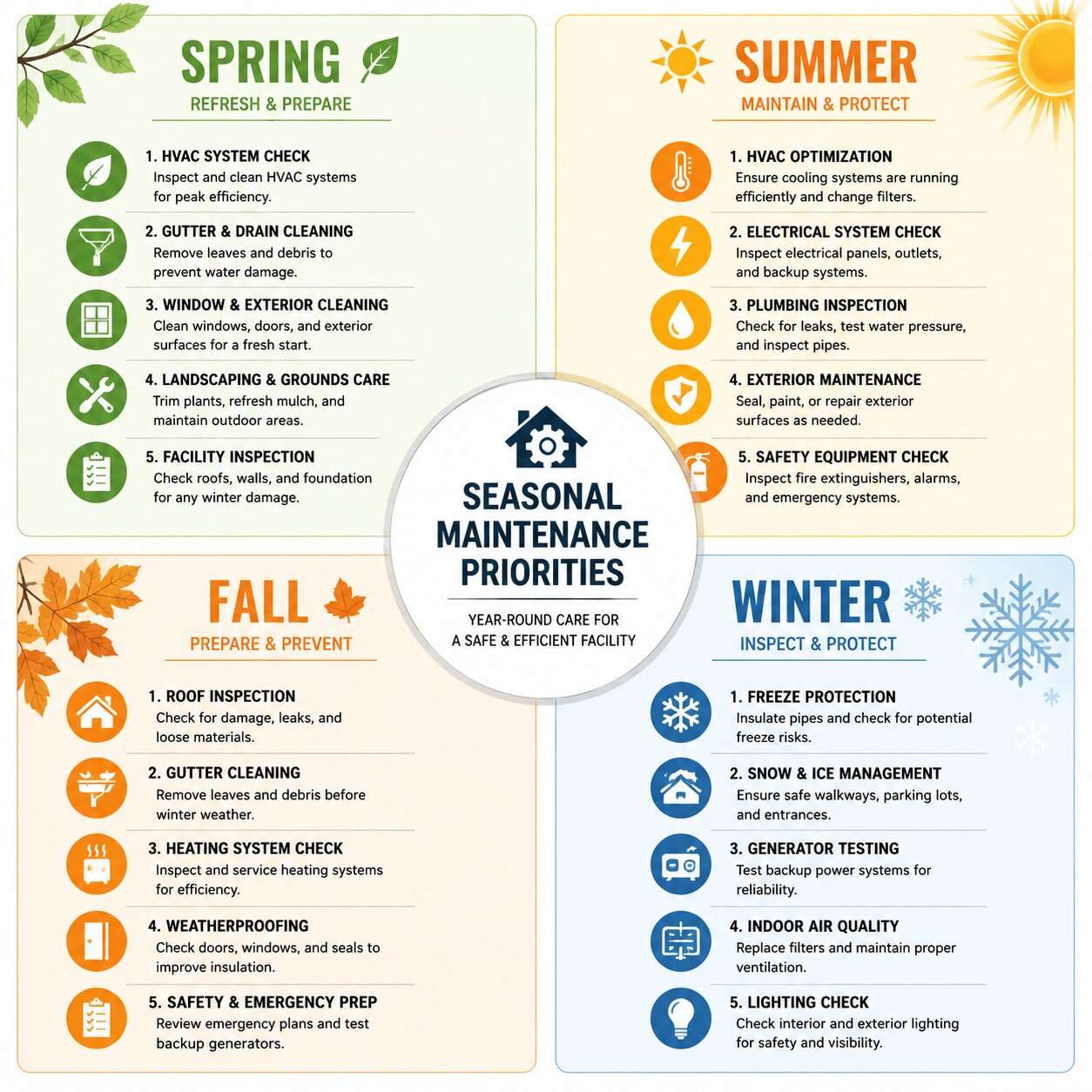
Different seasons present unique challenges. A seasonal maintenance for commercial buildings approach prevents weather-related damage and system failures.
Spring Maintenance Priority
April-May Focus:
- Clean gutters and downspouts thoroughly after winter debris
- Inspect roof for winter damage (ice dams, heavy snow damage)
- Test cooling systems before summer peak demand
- Check exterior caulking and sealing; reseal as needed
- Power wash building exterior and parking lot
- Landscape maintenance: pruning, mulching, spring fertilization
- Inspect windows and glass for cracks
Summer Maintenance Priority
June-August Focus:
- Monitor HVAC performance during peak cooling season
- Daily filter checks; replace more frequently in high-use buildings
- Inspect building exterior for UV damage to roofing, caulking, paint
- Check parking lot markings and lighting for visibility
- Verify backup power systems (generators) monthly
- Clean condensing coils on HVAC units
- Address any leaks immediately before water damage escalates
Fall Maintenance Priority
September-November Focus:
- Deep clean gutters and roof before winter
- Have HVAC systems serviced before heating season
- Seal cracks in exterior walls and window frames
- Weatherstrip doors and windows
- Test and service heating systems
- Inspect and clean parking lot drains
- Trim trees near building to prevent winter snow/ice damage
- Inspect foundation for cracks before freeze-thaw cycles
Winter Maintenance Priority
December-February Focus:
- Monitor heating system performance daily
- Clear snow and ice from walkways, parking lots, and roof (snow load)
- Inspect exterior for freeze-thaw damage
- Check insulation around pipes to prevent freezing
- Maintain emergency supplies (salt, sand, shovels)
- Service heating system monthly
- Monitor for ice dams and water infiltration
- Test emergency generators monthly
Commercial Building Inspection Checklist: Legal and Compliance
Beyond operational maintenance, you must ensure your building meets codes and regulations.
Safety Compliance Requirements
Fire Safety Systems:
- Sprinkler system inspection quarterly; professional testing annually (required by code)
- Fire extinguisher inspection and recharging annually
- Fire alarm system testing monthly and professional inspection annually
- Emergency exit signage clearly visible and lit; verify compliance with ADA
- Evacuation plan posted and communicated to all occupants
ADA Accessibility:
- Wheelchair accessible entrances, ramps, and pathways
- Accessible parking spaces properly marked and maintained
- Accessible restrooms with proper signage
- Accessible elevator access and emergency communication
- Annual ADA compliance audit
Environmental Compliance:
- Asbestos and lead paint surveys (if building predates 1980s)
- Proper storage and labeling of hazardous chemicals
- Grease trap maintenance in food service areas
- Storm water management system compliance
- HVAC refrigerant disposal (EPA regulations for phased-out refrigerants)
Building Codes and Permits:
- All major repairs and system replacements require proper permits
- Work must meet current building codes, even if original installation was grandfathered
- Document all inspections and approvals
- Maintain records for insurance and liability protection
Building Maintenance Software and Technology
Commercial facility maintenance planning is exponentially easier with the right tools.
Facility Management Platforms
Popular Options:
- Maintenance.com: Mobile-first platform with work order management, preventive scheduling, and reporting
- Planon: Enterprise solution for large facilities with real estate management and space planning
- IBM Maximo: Comprehensive asset management for complex facilities
- UpKeep: Intuitive software popular with mid-size facilities, including IoT sensor integration
- Microsoft Dynamics 365: Integrated solution for organizations already in the Microsoft ecosystem
Key Features to Prioritize:
- Mobile app for on-site technicians to receive work orders and report completion
- Automated scheduling of preventive maintenance tasks
- Work order history and documentation for compliance and warranty
- Inventory management for spare parts and materials
- Real-time reporting and analytics on maintenance spending and equipment health
- Integration with building automation systems and IoT sensors
- Mobile photo/video documentation of maintenance work
Building Automation Systems (BAS)
A Building Automation System continuously monitors and controls mechanical, electrical, and HVAC systems:
- Real-time monitoring of temperature, humidity, air quality, energy consumption
- Automated adjustments based on occupancy, time of day, and weather
- Alert generation when systems deviate from normal parameters
- Energy optimization by learning usage patterns and optimizing setpoints
- Remote access allowing facility managers to adjust settings from anywhere
- Data logging for historical analysis and predictive maintenance
Common Commercial Building Maintenance Mistakes to Avoid
Learning from others’ errors accelerates your success:
Mistake #1: Reactive vs. Preventive Mindset Many facility managers only schedule maintenance after something breaks. This reactive approach costs 25-30% more and creates dangerous conditions. Commit to preventive maintenance upfront.
Mistake #2: Inadequate Documentation Without maintenance records, you lose warranty claims, liability protection, and historical data. Document everything service dates, parts replaced, costs, technician notes.
Mistake #3: Deferred Capital Maintenance It’s tempting to skip expensive items like roof replacement or HVAC servicing to save money short-term. Deferred maintenance creates catastrophic failures costing 5-10x more. Budget annually for capital reserves.
Mistake #4: Overlooking Seasonal Changes Buildings face different stresses in summer (cooling loads), winter (heating and freeze-thaw), and transition seasons. Adjust maintenance schedules seasonally; don’t use a one-size-fits-all approach.
Mistake #5: Poor Communication with Tenants Inform tenants about scheduled maintenance so they prepare. Communicate maintenance updates transparently. Good communication prevents complaints and supports retention.
Mistake #6: Ignoring Energy Efficiency Many maintenance tasks directly impact energy consumption. Well-maintained HVAC systems run 20% more efficiently. Track utility costs; unusual increases often signal equipment problems.
Mistake #7: Lack of Professional Expertise Some facility managers try to handle all repairs in-house. Know your limits. Complex systems (HVAC, electrical, plumbing) require certified professionals. DIY mistakes are expensive.
Implementing Your Commercial Building Maintenance Plan
Ready to take action? Here’s your implementation roadmap:
Week 1-2: Assessment and Documentation
- Conduct a comprehensive building audit
- Document all major systems, age, condition, and service history
- Create an asset inventory spreadsheet or database
- Photograph building systems for reference
Week 3-4: Schedule Development
- Create a master maintenance calendar
- Assign specific tasks to staff or contractors
- Establish frequency for each task
- Set reminders and alerts in your facility management system
Month 2: Technology Implementation
- Select and implement facility management software
- Train staff on system usage
- Integrate with building automation systems if applicable
- Begin logging all maintenance work
Month 3+: Execution and Optimization
- Execute preventive maintenance as scheduled
- Monitor contractor performance and costs
- Track results: energy bills, emergency calls, equipment failures
- Adjust schedules based on real-world performance data
- Quarterly review of budget vs. actual spending
Conclusion: The Business Case for Commercial Building Maintenance
A comprehensive commercial building maintenance checklist isn’t an expense it’s an investment with measurable returns.
Buildings that receive consistent preventive maintenance experience:
- 30-40% reduction in emergency repair costs
- 20-25% improvement in energy efficiency
- Higher tenant satisfaction and improved retention
- Increased property value and appeal to potential investors
- Better compliance with safety and building codes
- Extended equipment lifespan, delaying costly replacements
The 2026 commercial landscape demands buildings that operate reliably, efficiently, and sustainably. Tenants expect comfortable, well-maintained spaces. Regulators demand safety and environmental compliance. Property investors require data-driven asset management.
A systematic approach to preventive maintenance for commercial buildings using the checklists, schedules, and best practices outlined in this guide positions your facility for success.
Start small if needed: focus on the highest-impact systems (HVAC, roof, electrical). Document everything. Use technology to stay organized. Budget adequately. And perhaps most importantly: commit to preventing problems rather than reacting to disasters.
Your future self and your building will thank you.
Ready to Optimize Your Commercial Building Maintenance?
AboutCFS specializes in comprehensive facility services designed to keep commercial buildings operating at peak efficiency. Our preventive maintenance programs are customized to your building’s specific needs, equipment age, and operational priorities.
From HVAC maintenance to seasonal inspections, electrical system management to emergency response, AboutCFS delivers:
- Experienced technicians certified in all major building systems
- Proactive, scheduled maintenance preventing costly emergencies
- Detailed reporting and documentation for compliance and budgeting
- 24/7 emergency response for critical systems
- Integration with your existing facility management processes
Whether you manage a single office building or a portfolio of commercial properties, AboutCFS provides the expertise and reliability your facility demands.
Learn more about our periodic janitorial services and discover how AboutCFS can transform your facility maintenance from reactive crisis management to strategic asset optimization.
Contact AboutCFS today for a free facility assessment and customized maintenance proposal. Let our experts show you how preventive maintenance reduces costs, improves reliability, and extends the lifespan of your building systems.
Your commercial building is too important to leave to chance. Partner with AboutCFS for comprehensive facility services that keep your operations running smoothly, safely, and sustainably.


