Introduction
Picture this: It’s Monday morning, 7:47 AM. Your employees are streaming into the office, coffee cups in hand, ready to tackle the week. The bathrooms sparkle. The floors gleam. The windows let in perfect natural light. Everything smells fresh.
Nobody thinks about why it’s like this.
But someone made it happen. While your team was home watching Netflix on Friday evening, someone was systematically transforming that space into the professional sanctuary you now occupy.
That someone is a facility management company basically the invisible ninjas of the commercial world who make sure your building doesn’t descend into chaos.
Here’s the thing most business owners don’t realize: a facility management company isn’t just there to push a mop around. Modern facility management is part science, part art, and entirely essential to keeping your business running smoothly. They’re the professionals who sit at the intersection of cleanliness, safety, maintenance, emergency response, and strategic operations.
Think of them as your facility’s personal physician?they provide regular checkups (preventive maintenance), treat injuries when they happen (repairs), and jump into emergency surgery mode when disaster strikes (24-hour emergency response).
Whether you’re running a sleek downtown office tower, managing a sprawling industrial facility, or overseeing multiple commercial properties across your region, understanding what a facility management company does?and why it matters?is absolutely critical.
So buckle up. We’re about to explore the complete world of professional facility management, complete with some eye-opening statistics, real-world scenarios, and the honest truth about why your facility is either helping or hurting your bottom line.
What Is a Facility Management Company? The Reality Behind the Name
A facility management company is a specialized service provider that manages, maintains, improves, and operates the physical infrastructure of commercial properties. They’re basically property detectives, performance analysts, and emergency responders rolled into one.
But here’s where it gets interesting: the scope of what they do has evolved dramatically.
Twenty years ago, facility management meant hiring a cleaning crew. Today, it’s a sophisticated operation that can include:
- Real-time building system monitoring
- Predictive maintenance using data analytics
- Emergency response protocols
- Sustainability initiatives
- Strategic cost optimization
- Regulatory compliance management
- Employee wellness programs
- Technology integration
Why does this matter to your business?
Because a poorly maintained facility doesn’t just look bad it actively costs you money and productivity.
Studies show that employees working in clean, well-maintained facilities are 15-30% more productive. That’s not a small number. For a 50-person office, that could translate to $150,000-$300,000 in additional productivity annually. And that’s just productivity?it doesn’t account for reduced sick days, lower turnover, or improved client perception.
A facility management company is an investment in your company’s success, not just a line item on your expense report.
The Core Services: Your Facility’s Complete Toolkit
Janitorial and Sanitation Services: The Foundation of Professional Facilities
Let’s start with what most people think facility management is: keeping things clean.
But there’s clean, and then there’s properly clean.
Periodic Janitorial Service: The Deep Dive
Imagine your office is a house. Daily cleaning is like doing the dishes and tidying up. Periodic janitorial service is like hiring professional housekeepers to deep clean every corner?the kind of cleaning that reveals what you forgot existed.
Periodic services typically include:
- Deep carpet cleaning and steam extraction (not just vacuuming?we’re talking microscopic dirt removal)
- Professional window washing (both interior and exterior, including those high-rise windows that make your janitor’s spouse nervous)
- Wall and baseboard cleaning (the places you pretend don’t exist until someone points out the dust)
- Floor stripping, waxing, and buffing (transforming dull, worn floors into surfaces that practically gleam)
- Furniture and upholstery sanitization (your office chairs getting the spa treatment they desperately need)
- Restroom deep cleaning and sanitization (turning the space everyone hates using into something actually pleasant)
Here’s a reality check: a quality periodic service typically happens monthly or quarterly, depending on foot traffic and facility type. The result? Your facility looks like it’s actually cared for, which affects everything from employee morale to client impressions.
Day Porter Services: The Daily Guardian
If periodic janitorial is the deep clean, day porter services are the daily maintenance that keeps things from falling apart between those deep cleans.
A day porter is essentially your building’s personal assistant?a trained professional who’s there throughout the day ensuring:
- Trash and recycling are managed strategically (not just emptied randomly)
- Spills are handled immediately (preventing slips and permanent stains)
- Restrooms stay stocked and sanitized throughout the day
- Common areas remain neat and presentable
- Quick fixes happen before they become big problems
- The facility maintains a “just cleaned” appearance from morning to evening
Pro tip: Facilities with day porter services report significantly higher employee satisfaction scores. Why? Because people notice when someone cares about their workspace. It’s a subtle but powerful signal that your company values professionalism and employee experience.
The cost of a day porter is often less than dealing with the productivity hit of a dirty facility. The ROI is genuinely impressive.
Floor and Surface Maintenance: More Than Just Pretty Floors
Here’s something nobody talks about: your floors are probably filthier than you think.
Not just visibly dirty?we mean contaminated at a microscopic level. Regular foot traffic, spills, tracked-in debris, and environmental pollutants accumulate in ways that standard vacuuming can’t address.
Carpet & Floor Reconditioning: The Resurrection
Carpet & Floor Reconditioning is where magic happens. Professional-grade reconditioning includes:
- Hot water extraction (industrial-strength cleaning that removes dirt that’s been hiding deep in carpet fibers since last month)
- Stain removal and spot treatment (that mysterious brown spot finally getting handled)
- Odor elimination (coffee spills, pet accidents, mysterious smells?all gone)
- Texture and appearance restoration (your five-year-old carpet looking almost new)
- Floor refinishing (hardwood and tile surfaces getting professional restoration)
Here’s what’s wild: a quality carpet reconditioning can extend your carpet’s lifespan by 5-7 years compared to regular cleaning alone. If you’re looking at $10,000-$50,000 for carpet replacement, reconditioning that costs $2,000-$5,000 suddenly seems like brilliant financial management.
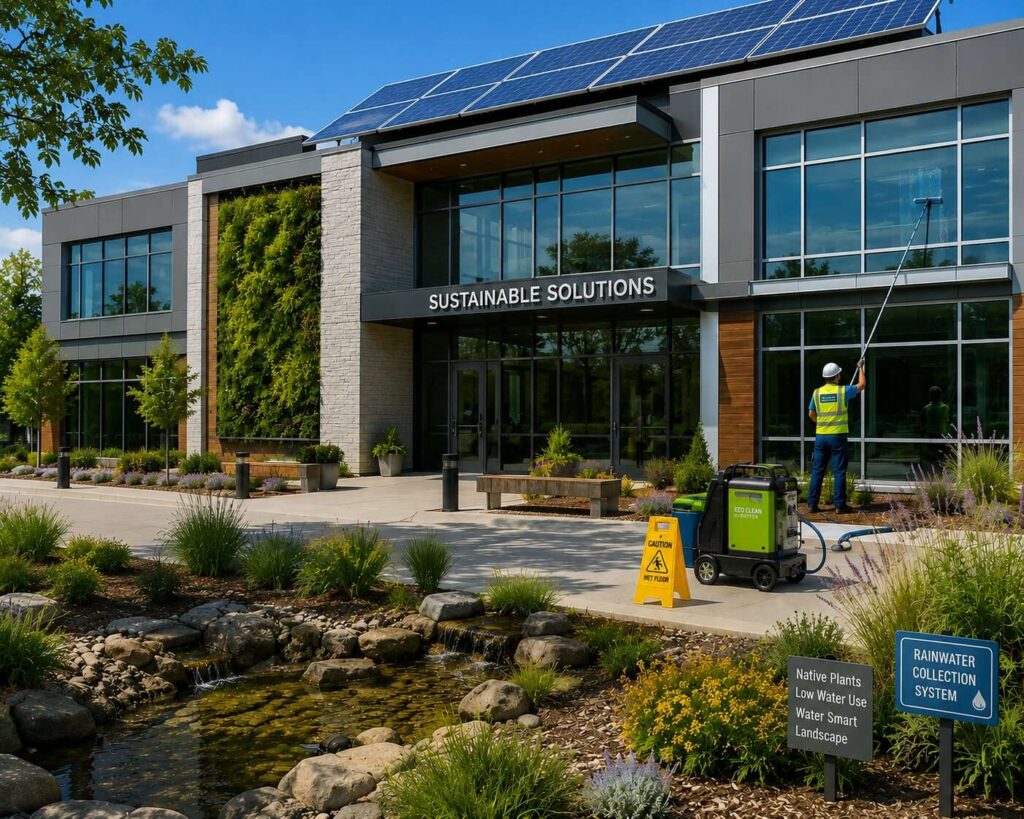
Power Washing: Industrial-Strength Transformation
Power washing is the sledgehammer of cleaning?except somehow elegant and professional.
This service uses high-pressure water (and sometimes specialized cleaning solutions) to blast away accumulated dirt, mold, algae, bird droppings, and environmental contaminants from:
- Building exteriors and facades
- Parking lots and concrete surfaces
- Entryways and walkways
- Equipment and industrial machinery
- Dumpster enclosures (you’re welcome)
Here’s why it matters: a grimy, weathered building exterior tells clients and customers that you’re either struggling or don’t care about details. Both are bad signals.
A freshly power-washed facility? That’s the non-verbal equivalent of a firm handshake and professional wardrobe. It costs way less than you’d expect, and the transformation is immediately visible.
Window Washing:?
Windows are interesting in facility management because they’re simultaneously:
- Invisible when they’re clean (nobody thinks about it)
- Immediately noticeable when they’re dirty (everyone sees it)
- Critical for natural lighting and mood (clean windows genuinely improve employee wellness)
- A nightmare to clean safely (especially if you’re on the 30th floor)
Professional window washing handles:
- Interior and exterior glass cleaning
- High-rise window access (with proper safety equipment and trained professionals)
- Regular maintenance scheduling
- Streak-free, professional results
The psychology is simple: clean windows let in more light, and more light makes people happier and more productive. It’s basically free mood improvement for your facility.
Building Maintenance: The Preventive Health Care Model
This is where facility management goes from “nice to have” to “absolutely essential.”
Building Maintenance is the difference between a $500 fix today and a $50,000 emergency next month.
The Preventive Maintenance Philosophy
Here’s the math that keeps facility managers awake at night:
- An HVAC filter replacement: $150-$300
- An HVAC system failure requiring emergency replacement: $8,000-$15,000
- Regular roof inspection and maintenance: $1,500-$3,000 annually
- Emergency roof repair due to water damage: $15,000-$50,000+
- Plumbing maintenance and cleaning: $500-$1,500
- Major plumbing failure and water damage remediation: $10,000-$100,000+
See the pattern? Preventive maintenance isn’t an expense it’s insurance.
Comprehensive building maintenance includes:
- HVAC system inspection and filter replacement (breathing room-temperature air instead of recycled grossness)
- Plumbing checks and maintenance (preventing disasters)
- Electrical system inspections (preventing fires and ensuring safety)
- Roof inspections and minor repairs (keeping water where it belongs?outside)
- Door and lock maintenance (security and access control)
- Safety system testing (emergency lighting, sprinklers, fire suppression systems)
- Water heater maintenance (because cold showers are nobody’s favorite)
Facilities that implement comprehensive preventive maintenance programs typically see:
- 25-30% reduction in unexpected downtime (your building stays operational)
- 20-25% lower overall maintenance costs (less emergencies, more planning)
- Extended equipment lifespan (your systems last longer)
- Improved safety records (fewer accidents and incidents)
Power Washing and Exterior Maintenance: Your Building’s First Impression
Your facility’s exterior is basically your facility’s suit jacket. Even if everything inside is perfect, a shabby exterior undermines your credibility.
Exterior Maintenance Beyond Aesthetics
Exterior maintenance isn’t vanity it’s structural preservation.
Power Washing Services prevent:
- Mold and mildew growth (which destroys materials over time)
- Algae buildup (a legitimate safety hazard)
- Paint deterioration (from accumulated contaminants)
- Structural damage from trapped moisture
Comprehensive Exterior Maintenance covers:
- Exterior wall cleaning (transforming weathered facades)
- Parking lot maintenance and seal coating (protecting your asphalt investment)
- Landscape maintenance (seasonal cleanup, tree trimming, plant care)
- Graffiti removal (addressing vandalism before it escalates)
- Lighting maintenance (security and safety lighting that actually works)
- Signage maintenance (your business name looking professional)
Here’s a truth that surprises business owners: graffiti removal is time-sensitive. Remove it within 24-48 hours, and it stays isolated. Wait a week, and you’ll often see it spread?taggers apparently interpret uninvaded graffiti as an invitation. So rapid response is genuinely strategic.
Specialized Services: When Cleaning Isn’t Enough
Sometimes your facility needs more than just maintenance?it needs transformation.
Painting, Drywall, and Wall Repair: The Refresh Button
Painting and Drywall Services include:
- Interior and exterior painting projects (color changes that transform spaces)
- Drywall installation and repair (fixing punches, scuffs, and damage)
- Wall texture application and removal (aesthetic changes and repairs)
- Surface preparation and priming (the actual critical work that determines paint quality)
- Professional painting planning and color consulting
Here’s the insider secret: proper surface preparation is 80% of a quality paint job. Rushing this step results in peeling, poor coverage, and disappointment. Quality facilities management companies understand this.
Wall Repair Services address:
- Water damage restoration
- Impact damage (yes, people punch walls)
- Scuff marks and stains
- Joint and corner repairs
- Paint-over restoration
A freshly painted office literally changes people’s mood. It’s psychological, but it’s real. A tired, worn office broadcasts that you’re struggling. A fresh, well-painted office says you’re thriving.
Construction, Demolition, and Renovation: The Major Leagues
For significant facility upgrades, comprehensive facility management companies handle:
- Build-outs and tenant improvements (complete office reconfiguration)
- Space reconfiguration (adapting to changing needs)
- New system installation (technology upgrades, equipment)
- Structural modifications (when the space needs to change shape)
- Safe demolition services (removing what’s no longer needed)
- Hazardous material removal (asbestos, lead paint?handled properly)
- Renovation services (phased improvements that keep your business operating)
The key word here is “phased”?quality facilities management understands that you can’t shut down completely. They plan renovations around your operational needs.
Furniture Installation and Cubicle Maintenance: The Flexible Workspace
Modern workplaces change constantly. Your office configuration today might be completely different in six months.
Furniture Installation and Cubicle Services include:
- Furniture assembly and installation
- Cubicle reconfiguration (rearranging your workspace)
- Desk and workspace setup
- Furniture repairs and refurbishment
- Space planning and optimization
- Moving and relocation services
This service is particularly valuable for growing companies or those adapting to hybrid work models. Instead of struggling with IKEA assembly instructions or calling handymen, you have professionals who understand optimal workspace design.
Moving and Relocation: Strategic Logistics
Confidential Documentation Relocation: When Secrecy Matters
Some facilities handle sensitive information. Banks, law firms, healthcare facilities, government contractors?these entities can’t just throw documents in a box and move them.
Confidential Documentation Relocation provides:
- Secure document moving and transportation
- Chain-of-custody documentation (tracking every box)
- Strict confidentiality protocols
- Inventory management and verification
- Climate-controlled storage options
- Compliance with regulatory requirements
This service turns a terrifying prospect (moving sensitive files) into a manageable, professional operation.
Emergency Response: The Moment Everything Changes
This is where facility management transitions from “nice to have” to “absolutely essential.”
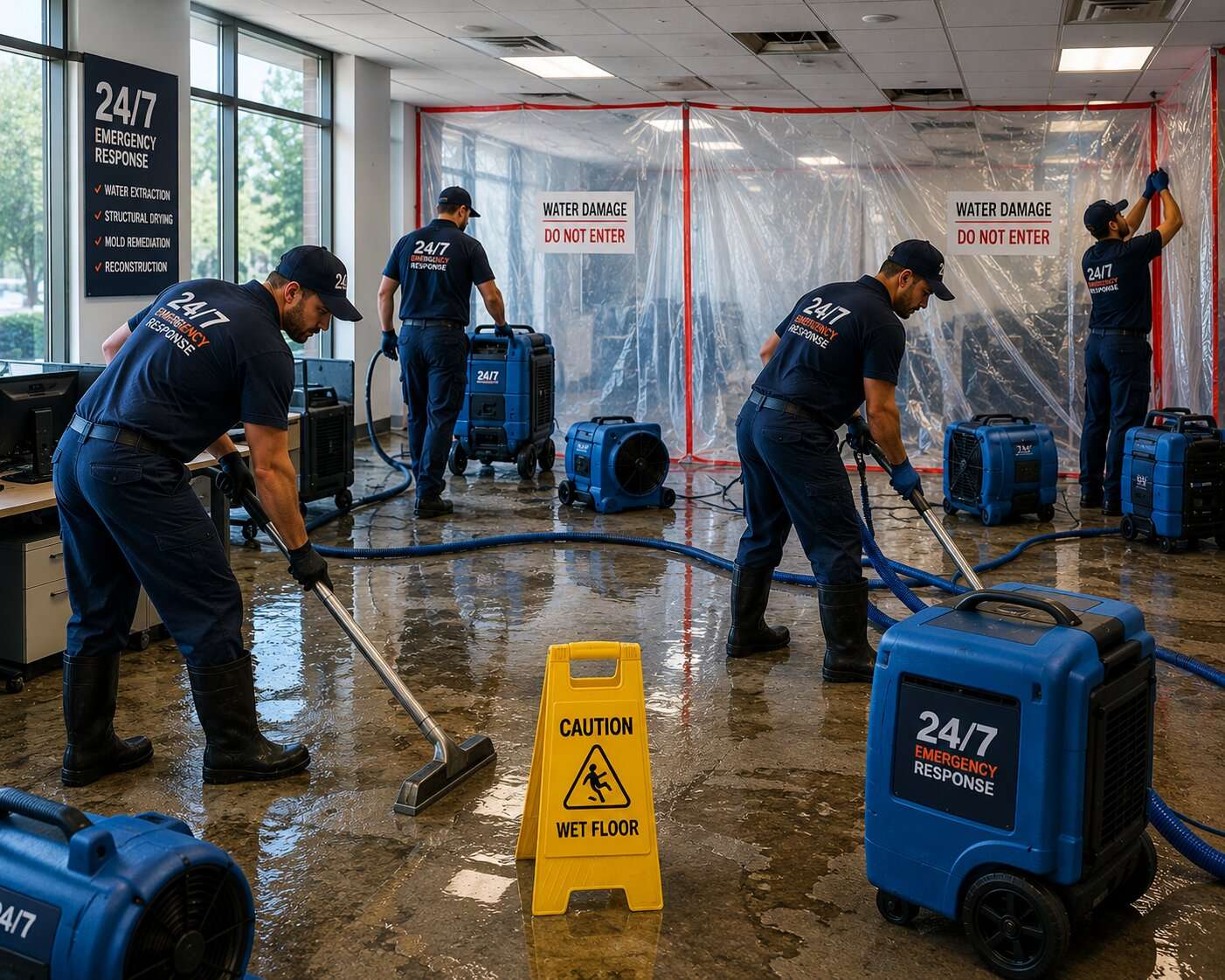
24-Hour Emergency Services: When Disaster Strikes
24-Hour Emergency Services respond to:
- Water emergencies (burst pipes, flooding, roof leaks happening at 2 AM on Sunday)
- HVAC failures (in the middle of summer or the dead of winter)
- Electrical emergencies (power outages, sparking systems)
- Structural damage (roof collapses, wall failures)
- Security breaches (break-ins, vandalism)
The difference between a manageable emergency and a catastrophic business interruption often comes down to response time. A facility management company with 24-hour availability doesn’t just fix the problem?they minimize business impact.
Water Extraction and Mitigation: The Disaster You Don’t See Coming
Water damage is particularly insidious because it’s both immediate and escalating:
- Hour 1: “Oh no, there’s water.”
- Hour 6: Water is seeping into walls and floors.
- Hour 24: Mold starts growing.
- Day 3: Structural damage becomes apparent.
- Day 7: What was a $5,000 problem is now a $50,000 problem.
Professional Water Extraction and Mitigation includes:
- Rapid response (they’re there within hours, not days)
- Advanced extraction equipment (removing water faster than you can say “insurance claim”)
- Moisture detection and monitoring (finding water where you can’t see it)
- Structural drying protocols (preventing hidden moisture damage)
- Dehumidification and air circulation (eliminating conditions for mold growth)
- Damage assessment and documentation (supporting insurance claims)
The ROI on emergency water mitigation is staggering. A rapid, professional response to water damage can save tens of thousands of dollars in structural repairs and mold remediation.
Why Facility Management Actually Matters: The Business Case
You could be thinking, “Okay, these services sound fine, but why should I actually care?”
Let’s talk about impact in language businesses understand: money and productivity.
Employee Productivity: The Hidden Benefit
Here’s what research consistently shows:
Employees working in clean, well-maintained facilities are:
- 15-30% more productive (this is from multiple studies, it’s not exaggeration)
- Less likely to take sick days (clean environments = fewer illnesses)
- More satisfied and engaged (psychological impact of working in a nice space)
- More likely to stay (office environment is a retention factor)
- More focused (cognitive performance improves in clean, well-organized spaces)
For a 50-person office, that productivity gap could represent $150,000-$300,000 in annual value.
A dirty bathroom isn’t just unpleasant?it’s actively costing you.
Cost Management: The Numbers Are Staggering
Preventive maintenance costs less than emergency repairs. This isn’t debatable; it’s mathematical fact:
Scenario: Roof Maintenance
- Annual inspection and maintenance: $1,500-$3,000
- Emergency roof replacement (after failure): $15,000-$50,000+
Scenario: HVAC Systems
- Annual maintenance and filter replacement: $600-$1,500
- Emergency system replacement: $8,000-$15,000
Scenario: Plumbing
- Preventive maintenance: $500-$1,500 annually
- Major pipe failure and water damage: $10,000-$100,000+
Facilities implementing comprehensive preventive maintenance programs see 20-25% reduction in total maintenance costs compared to reactive-only approaches.
Regulatory Compliance: The Risk You Don’t Want
Depending on your industry, facility standards aren’t optional suggestions?they’re legal requirements.
Violations can result in:
- OSHA fines (sometimes thousands per violation)
- Health department sanctions (affecting food service, healthcare, etc.)
- ADA accessibility violations (costly to fix retroactively)
- Environmental violations (regulations around hazardous materials, waste)
- Insurance policy cancellations (losing coverage because your facility failed inspection)
A professional facility management company ensures compliance as a standard operation.
Brand Image and Client Perception: The Silent Salesman
Your facility is a tangible representation of your company.
When clients walk into a clean, professional office, they perceive:
- Competence and success
- Attention to detail
- Financial stability
- Professional operation
- Respect for their time and experience
When they walk into a dirty, poorly maintained space, they wonder:
- Is this company struggling financially?
- Do they actually care about quality?
- Is this what their product or service experience will be like?
- Should I trust my business to them?
First impressions matter, and facilities absolutely matter.
Choosing Your Facility Management Partner: What Actually Separates Good from Great
Not all facility management companies are created equal. Here’s what separates professional partners from mediocre ones:
Experience and Specialization Matter
Look for companies with:
- Proven experience in your industry (they understand industry-specific challenges)
- Track record with similar facilities (they’ve solved your exact problems before)
- Relevant certifications and training (ISSA, OSHA, industry-specific credentials)
- Detailed references (call them?seriously)
- Understanding of emerging standards (sustainability, wellness certifications)
A facility management company experienced with healthcare facilities knows regulatory requirements that a generic FM company might miss. Specialization matters.
Technology and Systems: The Modern Approach
Forward-thinking facility management companies use:
- Computerized Maintenance Management Systems (CMMS) (tracking what’s been done and what’s needed)
- Digital work order tracking (real-time visibility)
- Real-time reporting and analytics (understanding your facility’s health)
- Scheduled maintenance planning (preventing surprises)
- Mobile apps for staff (enabling rapid response)
- Predictive maintenance (fixing things before they fail)
Technology isn’t flashy, but it’s how modern facility management actually delivers results.
Staffing and Training: Your Actual Contact Point
Quality facility management depends on trained, reliable staff:
- Professional certifications (showing real expertise)
- Background checks and security clearances (because they’re in your facility)
- Ongoing training (staying current with methods and safety)
- Professional appearance and conduct (reflecting your company’s values)
- Reliable scheduling and coverage (showing up when promised)
- Communication skills (explaining what they’re doing and why)
Your day porter, your maintenance technician, your cleaning crew?these people represent your facility management company and, by extension, your company.
Flexibility and Scalability: Real-World Adaptability
Your facility needs change seasonally, with growth, and unexpectedly.
Your partner should:
- Accommodate seasonal variations (more cleaning during high-traffic seasons)
- Scale services up or down as needed (growing from 20 to 100 employees)
- Handle emergency requests (that water leak on Sunday)
- Provide ad-hoc service options (that one-time deep clean)
- Maintain service quality at different scales (not degrading service when they’re busier)
The Future of Facility Management: Where This Is Heading
The facility management industry is evolving rapidly, and forward-thinking companies are already adapting.
Sustainable Practices: The New Standard
Modern facility management increasingly integrates:
- Eco-friendly cleaning products (effective without toxins)
- Energy-efficient equipment and systems (cost savings and environmental responsibility)
- Waste reduction and recycling programs (turning waste into managed resources)
- Water conservation technologies (reducing consumption)
- Carbon footprint reduction (competitive advantage)
Sustainability isn’t just environmental responsibility anymore?it’s business efficiency.
Technology Integration: The Connected Facility
Emerging technologies are transforming facility management:
- AI-powered predictive maintenance (fixing problems before they happen)
- IoT sensors monitoring building systems (real-time insights)
- Mobile applications for real-time work tracking (visibility and accountability)
- Data analytics for optimization (understanding your facility’s patterns)
- Automated scheduling and resource allocation (efficiency optimization)
The facility of the future isn’t just clean?it’s intelligent.
Wellness-Focused Facilities: The Post-Pandemic Reality
Post-pandemic, facility management increasingly focuses on:
- Enhanced sanitation protocols (health as baseline expectation)
- Air quality monitoring and improvement (IAQ is critical)
- Touchless systems and technologies (reducing contact points)
- Healthy building certifications (LEED, Well Building Standard)
- Mental wellness spaces (biophilic design, quiet areas)
- Ergonomic workplace design (employee health)
Facilities that prioritize wellness attract better talent and see improved retention.
Regional Considerations: Geo-Specific Facility Challenges
Facility management needs vary significantly by geography, climate, and local regulations.
Climate-Related Facility Challenges
Hot, Humid Climates (like much of Pakistan including Rawalpindi):
- Increased cooling system demand (HVAC maintenance critical)
- Rapid mold and mildew growth (moisture control essential)
- Higher frequency of power washing needed (heat accelerates dirt buildup)
- Cooling system breakdowns are critical emergencies (businesses grind to halt without AC)
- Water usage increases significantly (irrigation, cooling systems)
Regional Considerations:
- Local utility costs affect HVAC operation costs
- Seasonal dust storms require frequent exterior cleaning
- Ground water quality affects equipment lifespan
- Heat-related facility emergencies require rapid response
- Supply chain delays for replacement parts demand preventive maintenance
Regulatory Environment
Different regions have varying:
- Building codes and safety standards (varying by local government)
- Environmental regulations (waste disposal, chemical use)
- Labor regulations (affecting facility staffing)
- Health and safety requirements (industry-specific)
- Import restrictions (affecting equipment and chemical availability)
A local facility management company understands these nuances immediately.
Infrastructure Realities
Regional infrastructure affects facility needs:
- Power reliability (affecting HVAC and backup systems)
- Water availability (affecting cleaning operations)
- Waste management infrastructure (affecting disposal options)
- Service provider availability (affecting response times)
- Seasonal challenges (monsoons in some regions, extreme heat in others)
How AboutCFS Provides Comprehensive Facility Solutions
At AboutCFS, we understand that every facility is unique, with specific challenges determined by location, industry, size, and operational requirements.
Rather than offering a generic checklist of services, we provide an integrated facility management approach designed around your specific needs.
Our Service Ecosystem
Cleanliness and Sanitation Excellence:
- Periodic Janitorial Service (deep cleaning when you need it)
- Day Porter Services (consistent daily maintenance)
- Specialized cleaning (carpet, windows, power washing)
Building Systems and Maintenance:
- Preventive building maintenance (keeping systems healthy)
- HVAC, plumbing, and electrical checks
- Roof and structural inspections
- Emergency repair response (24/7 availability)
Specialized Facility Services:
- Painting, drywall, and wall repair
- Furniture installation and cubicle maintenance
- Construction, demolition, and renovation services
- Confidential document relocation
Emergency and Critical Response:
- 24-hour emergency services
- Water extraction and mitigation
- Rapid-response disaster cleanup
- Business continuity support
Exterior and Landscape:
- Power washing and exterior maintenance
- Graffiti removal (rapid response)
- Landscape maintenance
- Vagrant removal and area cleanup
Why Partnership Matters
We’re not vendors checking boxes. We’re partners invested in your facility’s success because your facility’s success directly impacts your business success.
Our approach includes:
- Customized maintenance schedules (based on your specific facility and usage)
- Preventive strategy (avoiding emergencies through planning)
- Rapid emergency response (24/7 availability for critical situations)
- Transparent communication (you always know what’s happening)
- Cost optimization (getting maximum value from your facility budget)
- Regional expertise (understanding local climate, regulations, and challenges)
The Bottom Line: Why Facility Management Isn’t an Expense
A facility management company does far more than keep things clean.
They’re strategic partners in your operational success. They protect your investment. They enhance your brand. They safeguard your employees and visitors. They ensure compliance with regulations. They optimize costs. They maintain systems before they fail catastrophically.
The Real Impact
The right facility management partner:
- Reduces costs through preventive maintenance and operational efficiency (25-30% maintenance cost reduction)
- Improves productivity by maintaining clean, healthy workspaces (15-30% productivity increase)
- Ensures compliance with health, safety, and environmental regulations
- Protects your investment through proper maintenance and care
- Enhances your brand through professional appearance and operations
- Provides peace of mind knowing emergencies are handled professionally
- Scales with your needs as your business grows and changes
Whether you manage a single office or a complex multi-building portfolio, whether you’re in Rawalpindi, Lahore, Karachi, or any major commercial center, investing in professional facility management isn’t an expense?it’s a strategic decision that impacts productivity, profitability, and your company’s reputation.
Ready to Transform Your Facility Operations?
If you’re currently managing facility operations alone, juggling multiple vendors, dealing with constant surprises, or simply not satisfied with your current facility quality, it’s time to explore what integrated facility management can do.
AboutCFS provides comprehensive, integrated facility management solutions tailored to your specific business needs and regional requirements.
From periodic janitorial service to emergency water mitigation, from carpet reconditioning to 24-hour emergency response, from painting to facility renovations, we’re equipped to handle your facility’s complete spectrum of needs.
Why wait for the crisis?
Contact AboutCFS today for a comprehensive facility assessment and consultation. Let’s discuss how professional facility management can:
- Transform your current facility operations
- Reduce your overall facility costs
- Improve employee satisfaction and productivity
- Ensure regulatory compliance
- Provide peace of mind
Your facility is the physical foundation of your business. It deserves professional management from a partner who understands your specific needs.
Call AboutCFS today. Your facility will thank you.
AboutCFS: Comprehensive Facility Management Solutions for Businesses of All Sizes


