Imagine walking into your office on Monday morning and discovering that the bathrooms haven’t been cleaned since last Wednesday, the carpets look like they’ve hosted an indoor mud festival, and there’s a mysterious substance on the conference room table that nobody wants to investigate. Doesn’t sound like the professional environment you’ve worked hard to build, does it?
A commercial cleaning checklist for offices isn’t just about appearances though your clients will definitely notice if your workspace looks sharp. It’s about protecting your investment, maintaining employee wellness, complying with health standards, and ensuring your facility operates like the well-oiled machine you intended it to be. According to recent studies, 77% of employees believe a clean workplace directly impacts their productivity and morale.
This comprehensive guide walks you through everything you need to know about maintaining an impeccable office environment, from daily quick-wins to specialized deep-cleaning procedures that most facility managers overlook.
Why a Commercial Cleaning Checklist Matters
Before diving into specifics, let’s talk about why having a structured office cleaning standards checklist isn’t optional it’s essential.
Health and Safety Compliance
Your office isn’t just a place where people work it’s a shared environment where germs, bacteria, and allergens congregate like they’re at an all-inclusive resort. During cold and flu season, a single contaminated surface can infect dozens of employees within days. OSHA requires that workplaces maintain sanitary conditions, and failing to do so can result in fines, liability issues, and employee absences that tank productivity.
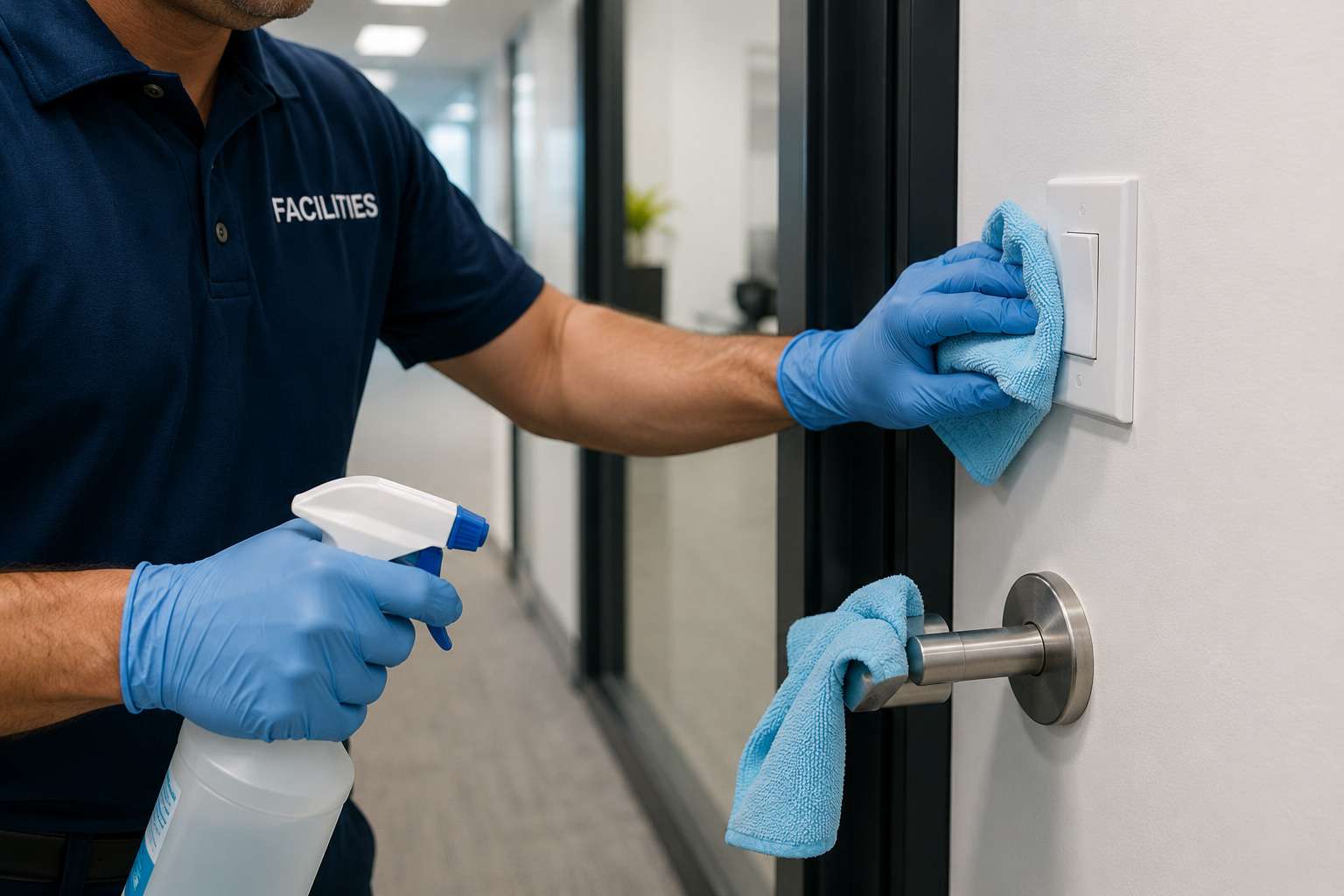
A proper cleaning checklist ensures that high-touch surfaces door handles, light switches, elevator buttons, and keyboard areas get sanitized regularly enough to prevent disease transmission. It’s not paranoia; it’s professional responsibility.
Employee Productivity and Morale
Here’s something facilities managers rarely discuss: cleanliness affects your bottom line. When employees work in a clean, organized environment, they experience reduced stress levels, better focus and concentration, lower absenteeism, and improved retention rates. A grimy office sends a message: “We don’t care about the details.” A clean one says: “We’re professional, organized, and we value you.” The psychology is straightforward people perform better when they feel respected.
Client and Visitor Impressions
Your office is your first handshake with potential clients. Studies show that 59% of consumers judge a business based on its physical cleanliness. A spotless conference room, gleaming floors, and fresh-smelling bathrooms communicate competence and trustworthiness. Conversely, dust on the blinds and sticky bathroom floors scream neglect and can cost you business.
Equipment Longevity
Dust and grime aren’t just ugly they damage equipment. HVAC systems clogged with dust work harder and fail sooner. Carpets with embedded dirt deteriorate faster. Windows with buildup can eventually scratch and become permanent eyesores. A preventive cleaning approach actually saves money on repairs and replacements over the long term.
The Daily Office Cleaning Checklist
Let’s get practical. Your commercial facility maintenance checklist should start with daily tasks that prevent problems from compounding. Think of this as the foundation of your entire facility management strategy.
Morning Quick-Clean (Before Staff Arrives)
The first impression often happens before business hours. Start with bathrooms: empty all trash bins, clean and sanitize toilet seats and fixtures, wipe down sinks and faucets, restock soap dispensers and paper towels, sweep and spot-clean floors. Moving to common areas, vacuum or sweep entryways and main corridors, wipe down door handles and light switches, empty lobby trash receptacles, and straighten seating areas.
Your kitchen or break room deserves special attention. Clean and sanitize countertops, wipe down microwave and refrigerator handles, empty trash and recycling bins, and sweep flooring. Executive areas like conference rooms should have tables dusted, chairs organized, and whiteboards cleaned. These details matter more than you’d think erasure marks on whiteboards look unprofessional.
Throughout-the-Day Maintenance
Mid-day touch-ups prevent accumulation. Empty high-traffic trash bins, spot-clean visible spills immediately, refill paper product dispensers, and do a quick wipe-down of bathroom sinks. At the end of the day, conduct a final reset: empty all trash bins, wipe down conference room tables, collect empty coffee cups and food debris, and sanitize door handles. A final walkthrough ensures nothing’s been missed.
The consistency of daily maintenance is what separates professional facilities from mediocre ones. It’s not glamorous work, but it’s the backbone of facility management.
Weekly Deep-Cleaning Tasks
Daily cleaning maintains the baseline, but weekly deep-cleaning prevents decay. This is where professional janitorial services become invaluable. You can’t spot-clean your way to a truly clean office deep cleaning requires time, equipment, and expertise.
Carpet and Floor Care
Vacuum high-traffic areas twice weekly to capture embedded dirt that a single pass misses. Spot-treat stains immediately to prevent setting. Remove gum, debris, or adhesive that accumulates. Weekly maintenance in entrance areas prevents tracked-in dirt from spreading throughout the office. Monthly, hard floors should receive stripping and waxing in high-traffic hallways to maintain that professional appearance.
Most offices neglect the areas under desks and furniture where dirt and allergens accumulate invisibly. Weekly movement and cleaning of office furniture prevents this hidden problem that affects indoor air quality. It’s the difference between a clean-looking office and an actually clean office.
Restroom Deep-Clean
Beyond daily sanitization, weekly deep-cleaning should address scrubbable grout lines in tile areas, toilet tank mechanisms, all metal fixtures with polish, air vents that collect dust, wall surfaces, and floor baseboards. Refresh urinal cakes and air fresheners. These details prevent that stale bathroom smell that no amount of air freshener can cover.
Glass and Window Cleaning
Clean windows and glass doors significantly impact perceptions. Weekly interior cleaning prevents dust and fingerprint buildup. Polish glass doors and partitions that get frequent touch. Address mineral deposits or water stains from sprinklers or rain before they become permanent. Clean glass in conference rooms and reception areas where clients will be impressed by attention to detail.
Kitchen and Break Room Deep-Clean
Clean behind and under appliances where grease and crumbs accumulate. Degrease stovetops and hoods this prevents fire hazards. Sanitize inside refrigerators and remove expired items. Scrub sink drains to prevent odors that signal neglect. Wipe down cabinet fronts and clean light fixtures above counters. A fresh-smelling break room encourages employees to actually use it instead of eating at their desks.
Monthly Maintenance and Specialized Services
Some tasks don’t need to happen weekly they need to happen strategically and thoroughly. This is where many facilities fall short, leading to unexpected problems and expensive emergency repairs.
Carpet and Floor Reconditioning
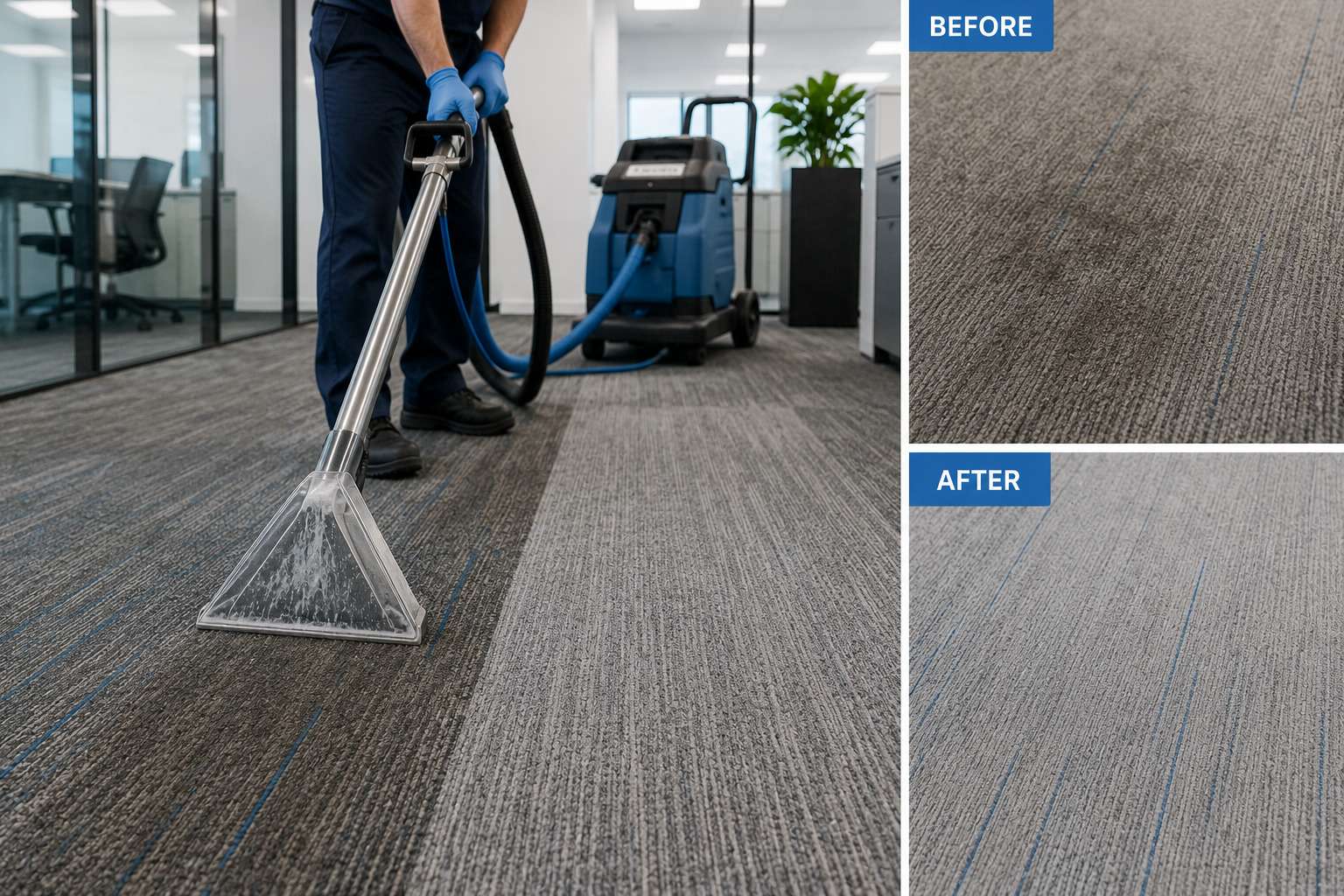
Regular vacuuming maintains carpets, but monthly or quarterly carpet shampoo using hot water extraction removes deep dirt that regular vacuuming misses. Professional carpet reconditioning services extend carpet lifespan from 3-4 years to 7-10 years. The investment in quality extraction cleaning pays for itself by delaying expensive carpet replacement.
The process removes embedded dirt, dust mites, and allergens while improving indoor air quality. It also removes odors that regular cleaning can’t touch that weird smell in the corner that nobody talks about but everyone notices.
Power Washing Exterior Areas
Monthly or quarterly power washing keeps your building’s exterior pristine and prevents permanent damage. It removes algae, mold, and mildew growth that makes buildings look neglected. Parking lots look fresher, facades are restored, and gum and graffiti marks are eliminated. The cost is minimal compared to the permanent staining that occurs if you ignore this maintenance.
Window Washing (Professional-Grade)
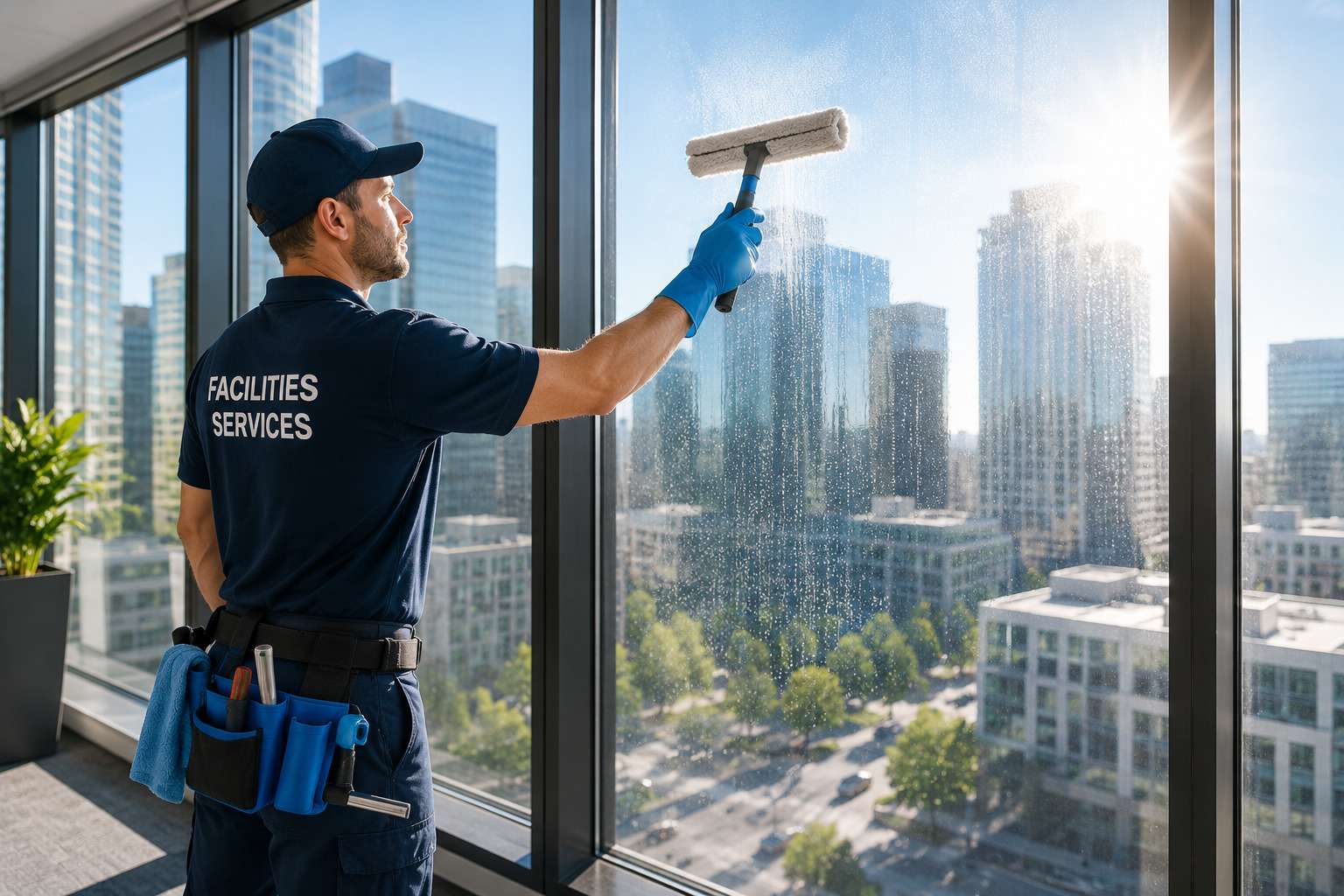
While weekly interior window cleaning prevents buildup, professional window washing done quarterly addresses exterior window grime from pollution, salt spray, and industrial fallout. Professional equipment and techniques safely clean windows in hard-to-reach areas. The sparkling appearance surprisingly impacts employee morale and client impressions.
HVAC System and Vent Cleaning
Dust-clogged HVAC systems don’t just work harder they circulate contaminants throughout your office. Schedule professional duct cleaning annually and have vents cleaned quarterly to prevent dust circulation. Replace HVAC filters monthly and monitor for unusual odors indicating mold or contamination. A well-maintained HVAC system runs 20-30% more efficiently than a neglected one.
Seasonal and Specialty Cleaning
Spring and fall are natural times to address larger maintenance items that don’t fit into weekly or monthly routines.
Seasonal Deep Cleaning
Spring cleaning should include deep-cleaning all light fixtures, washing interior walls and baseboards, organizing storage areas, dusting air vents and returns, power washing exterior areas, and cleaning gutters and downspouts. Refresh office furniture and polish all metal fixtures. Think of spring cleaning as hitting the reset button on your facility before the busy summer season.
Managing Active Renovations
If your office has active renovations or building maintenance ongoing, daily dust control and debris removal become critical. Use plastic sheeting to isolate work areas and HEPA filtering to contain particulates. Plan a post-renovation deep-clean before resuming normal operations and verify that work areas meet health standards. Construction creates exponentially more work for your cleaning staff, so budget accordingly.
Specialty Assessment Tasks
Quarterly inspection should assess carpet wear patterns in high-traffic areas, stain severity and treatability, padding condition, flooring sealing that protects surfaces, and floor edging and repair needs. This assessment approach prevents surprises and allows you to budget for maintenance before problems become emergencies.
Workplace Sanitation Best Practices
Having a checklist is one thing. Executing it properly is another. Here are practices that distinguish average facilities from exceptional ones.
Sanitization vs. Cleaning
Many people use these terms interchangeably, but they’re different. Cleaning removes visible dirt and debris. Sanitizing kills bacteria and germs on surfaces. You need both. Clean a surface first (removes organic matter that interferes with sanitizers), then apply an approved disinfectant and let it sit for the required contact time. This sequence matters.
High-Touch Surface Prioritization
Not every surface requires the same attention. Focus resources on high-touch areas: door handles, light switches, elevator buttons, bathroom faucets, conference room tables, shared keyboards, phone equipment, and armrests. These surfaces should be sanitized multiple times daily during cold and flu season or if illness is present.
Proper Chemical Use and Safety
Never mix cleaning chemicals especially bleach and ammonia, which create toxic gas. Use appropriate PPE and follow product instructions for dilution rates and contact time. Store chemicals in clearly labeled, secure locations with accessible MSDS documentation. Train staff on proper chemical handling and use environmentally responsible products when possible.
Allergen Control Strategies
Office allergens come from carpet dust, mold spores in HVAC systems, pet dander, pollen, and cleaning product residue. Combat allergens through regular HEPA vacuuming, humidity control, air purification systems, duct cleaning, removal of soft furnishings that trap allergens, and scent-free cleaning products. This is particularly important if staff members have allergies or respiratory sensitivities.
Implementation: Getting It Done Right
Knowing what to clean is useless without a system for getting it done. Here’s how to implement your checklist effectively and maintain consistency.
Creating Accountability
Assign specific people or teams for each task and create a rotating schedule to prevent the same person doing the same task daily—this prevents missed spots from habituation. Document completion through checkbox systems or digital apps. Conduct random inspections to verify completion and address shortcomings immediately and constructively. Accountability doesn’t mean blame; it means creating ownership.
Investing in Equipment
Essential equipment includes HEPA-filter vacuum cleaners that capture allergens rather than spreading them, microfiber cleaning cloths that trap dirt, color-coded cleaning tools by area to prevent cross-contamination, appropriate mops and brushes, pressurized sprayers, personal protective equipment, and backup equipment so cleaning doesn’t stop if something breaks.
Optimal Scheduling
Schedule daily tasks for 6-8 AM before staff arrives and evening tasks for 5-7 PM after most staff leaves. Weekly deep-cleaning happens during less busy times, mid-week during off-hours. Monthly and quarterly work should be scheduled in advance to coordinate with operations. Avoid cleaning during peak business hours when you’re disrupting work and compromising staff safety.
Documentation for Compliance
Track task completion with date/time/initials, issues discovered during cleaning, chemical usage and expiration dates, equipment maintenance and repairs, inspection results, and staff training dates. This documentation serves multiple purposes: liability protection, performance evaluation, identifying improvement areas, budget planning, and compliance verification if inspected.
Emergency and Specialized Cleaning Scenarios
Sometimes standard checklists aren’t enough. Certain situations require specialized knowledge and equipment.
Water Damage and Mitigation
When roof leaks, burst pipes, or flooding occur, immediate extraction is needed within 24-48 hours to prevent mold growth. Professional equipment removes water from carpets, subfloors, and walls. The mitigation process involves extracting water using industrial pumps, dehumidifying affected areas, monitoring for mold growth, and restoring or replacing materials. Speed is critical the first 48 hours determine whether you salvage the space or face mold remediation.
Biohazard Cleanup
Certain situations require specialized training and certification: blood or bodily fluid cleanup, potential pathogen contamination, hazardous materials, mold remediation, and chemical spill cleanup. Never attempt these without proper certification. Improper handling creates health risks and legal liability that far exceed the cost of hiring professionals.
Graffiti Removal and Vandalism Response
Quick graffiti removal prevents permanent damage. Remove graffiti before it’s tagged over multiple times, which makes removal exponentially harder. Use appropriate solvents for different surfaces, high-pressure washing for exterior, special strippers for certain paints, and protective coatings to prevent future graffiti sticking.
Pest Control Strategy
Prevention beats response. Regular cleaning removes food sources. Sealed entry points prevent access. Monthly monitoring prevents infestation before it starts. Professional pest control services handle situations that exceed internal capabilities. Documentation of any pest issues supports your preventive approach.
Measuring Success: Key Metrics
You need to know if your cleaning program is actually working. Success looks different depending on your priorities.
Quality Metrics
Track visual inspections by management and leadership, employee satisfaction surveys about facility cleanliness, visitor feedback, reduction in damage or repairs needed, extended carpet and floor lifespan, and reduced equipment failure. These metrics tell you whether your cleaning program is delivering the visible quality you’re aiming for.
Health Metrics
Monitor employee absenteeism trends clean offices produce fewer sick days. Track HVAC system efficiency and filter life. Check air quality testing results. Review pest activity reports. Monitor allergy-related complaints from staff. These metrics show whether your facility is supporting employee health or becoming a liability.
Financial Metrics
Calculate cost per square foot of facility cleaning, cost savings from extended equipment life, reduced emergency repairs from preventive maintenance, return on investment from professional services versus in-house, and budget variance tracking. These metrics justify your investment to leadership.
Outsourcing vs. In-House: Making the Right Choice
This is where many facility managers face a critical decision that affects budget and quality.
In-House Cleaning Considerations
Keeping cleaning in-house provides direct control over quality standards and the ability to address issues immediately. For smaller facilities, it’s often cheaper. Staff familiarity with the space prevents missed areas. However, in-house cleaning requires training burden, struggles with staff turnover affecting consistency, limits specialized equipment access, and creates scaling challenges for seasonal peaks. You’re also liable for employment issues, training, and insurance complications.
Professional Janitorial Services
Professional services provide consistent, standardized quality executed by trained staff. They bring specialized equipment and chemicals, flexibility to scale up or down, insurance and liability protection, and access to specialized services like power washing and carpet cleaning. You can focus on your core business instead of facility management.
Cost consideration: Professional services cost more upfront but save money through extended equipment lifespan, reduced emergency repairs, better health outcomes reducing sick days, and professional liability coverage. For most mid-sized facilities, the long-term financial advantage favors professional services.
Technology and Modern Solutions
Modern facility management increasingly uses technology to optimize cleaning operations and prevent problems.
Cleaning Management Software
Platforms now exist that send automated task notifications, track completion in real-time, allow photo documentation of problem areas, generate audit trails for compliance, alert managers to missed tasks instantly, and integrate with maintenance request systems. Digital tracking provides accountability and visibility that traditional clipboard systems cannot match.
IoT Sensors and Monitoring
Emerging technology includes air quality sensors alerting to contamination, humidity monitors preventing mold, occupancy sensors optimizing cleaning schedules, water detection preventing damage, and temperature monitoring for HVAC efficiency. As technology improves and costs decrease, these sensors will become standard in modern facilities.
Common Cleaning Mistakes to Avoid
Learning from others’ mistakes accelerates your facility management maturity.
Under-Resourcing Daily Cleaning
Facilities that skimp on daily cleaning create exponentially more work for weekly deep-cleaning crews and invite health issues. Daily cleaning is not optional if you want to maintain professional standards. It’s cheaper to do it consistently than to address accumulated problems.
Ignoring High-Touch Surfaces
During cold and flu season, many facilities maintain general cleaning but neglect high-touch surfaces. This is backwards. Focus resources where germs transmit most easily: door handles, light switches, elevator buttons, and shared equipment.
Mixing Incompatible Chemicals
Never mix bleach with ammonia, acid-based cleaners with bleach, or different commercial cleaning products. Improper combinations create toxic gases or reduce effectiveness. Train staff on chemical compatibility to prevent dangerous reactions.
Delaying Stain Treatment
Carpet stains set quickly. Waiting more than a few hours often means permanent damage. Immediate spot-treatment prevents most stains from becoming permanent. Delayed treatment often requires professional extraction or replacement.
Neglecting Air Quality
Visible cleanliness and healthy air quality are different things. An office can look clean while circulating dust, allergens, and pathogens through HVAC systems. Regular vent and duct cleaning is essential for health, not just appearance.
Creating Your Facility Cleaning Checklist
Now let’s put this into practice. Your facility checklist should be customized for your specific space, but follow this framework.
Assessment Phase
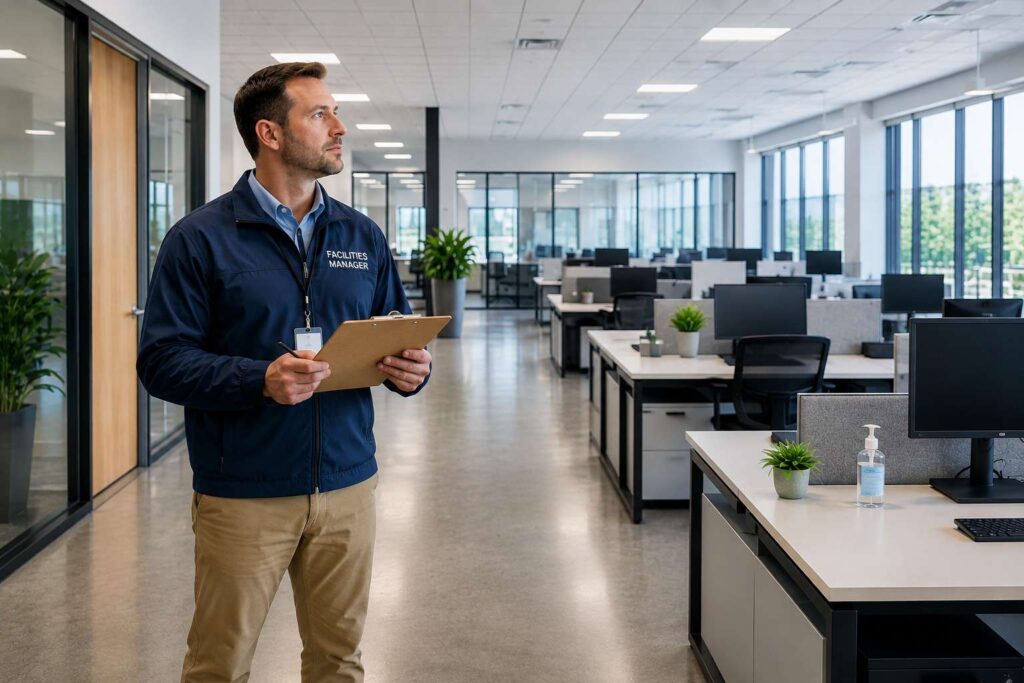
Walk through your facility and identify all areas: bathrooms, common spaces, kitchens, executive areas, storage, outdoor spaces, and equipment that needs regular maintenance. Assess current condition and determine what additional cleaning would significantly improve the space.
Task Definition
For each area, define what constitutes “clean.” Be specific: “Empty trash” is clear; “Tidy up” is not. Include frequency: “Daily,” “Weekly,” “Monthly,” or “Quarterly.” Assign responsibility to specific people or teams.
Resource Planning
Determine what supplies, equipment, and training staff need. Budget for professional services where justified. Plan schedules that don’t disrupt operations. Build in flexibility for emergencies and seasonal variations.
Documentation and Review
Document your checklist in a format that works for your operation: paper checklists, spreadsheets, or dedicated software. Conduct weekly reviews of completion. Monthly, assess whether the checklist is working and adjust based on results.
The Long-Term Benefits of Consistency
Here’s what happens when you commit to a serious cleaning program: after 3-6 months, maintenance becomes dramatically easier. Accumulated grime is gone. Staff takes pride in their workspace. Health metrics improve. Equipment lasts longer. Clients are consistently impressed. The initial effort yields compound benefits.
Facility cleanliness isn’t one decision it’s a series of decisions made daily, weekly, and monthly. Each decision either reinforces professional standards or allows them to slip. The cumulative effect of consistent attention is a facility that operates beautifully, supports employee health and productivity, and impresses every client who walks through the door.
Conclusion
A commercial cleaning checklist for offices is the foundation of professional facility management. It’s not about perfection it’s about consistency, health, and professionalism. The best checklist is one you actually follow, so start simple, document completion, and refine based on results.
Your office space tells a story about your business. Make sure it’s a story worth telling. Implement these office cleaning standards, assign clear responsibilities, invest in quality supplies and equipment, and monitor results. Whether you manage cleaning in-house or partner with professional janitorial services, the principles remain constant: daily basics prevent decay, weekly deep-cleaning maintains quality, and monthly specialty work prevents larger problems.
The financial return is compelling extended equipment lifespan, reduced emergency repairs, better employee health and retention, and improved client impressions. But the human return matters more: employees who work in clean, professional facilities perform better and feel valued. That’s worth the investment.
Ready to transform your facility? AboutCFS provides comprehensive commercial facility services including periodic janitorial service, day porter services, carpet and floor reconditioning, power washing, and emergency response cleaning. Our trained professionals maintain the highest standards so you can focus on running your business. Contact AboutCFS today for a facility assessment and customized cleaning plan tailored to your specific needs.


